Healthcare Merchant Services: What Providers Should Look For

Healthcare merchant services cover the systems a provider uses to accept payment from patients: card terminals, online and phone payments, stored cards for payment plans, and the reporting that ties it all back to the practice’s books. The term gets used loosely, which is part of the problem. A solo dental office, a five-provider medical group, and a busy veterinary clinic are often sold the same package, even though the way each one collects money looks nothing alike.

The stakes have risen, too. Patients now cover a larger share of their own care through deductibles, copays, and elective procedures, so more of a practice’s revenue arrives directly from the patient rather than from a payer. That shifts collection onto your front desk and your billing staff, and it makes the tools they use worth a serious look.

This guide covers what healthcare merchant services actually include, where requirements differ between practice types, what the fees really cost, and how to evaluate a provider before you commit.

What Healthcare Merchant Services Include

Stripped of the sales language, a healthcare merchant account needs to handle four situations. Most providers encounter all four in a normal week.

Payments taken in person. The copay or balance collected at check-in or check-out, where speed matters because someone is standing at the desk.

Payments taken remotely. Balances after insurance adjudicates, collected days later by phone, emailed invoice, or an online payment page.

Scheduled and repeat payments. Treatment plans, membership programs, and payment arrangements that require securely stored payment details rather than a card number written on a form.

Reconciliation and reporting. Receipts, transaction history, and records your billing staff can match against patient accounts without exporting three different reports.

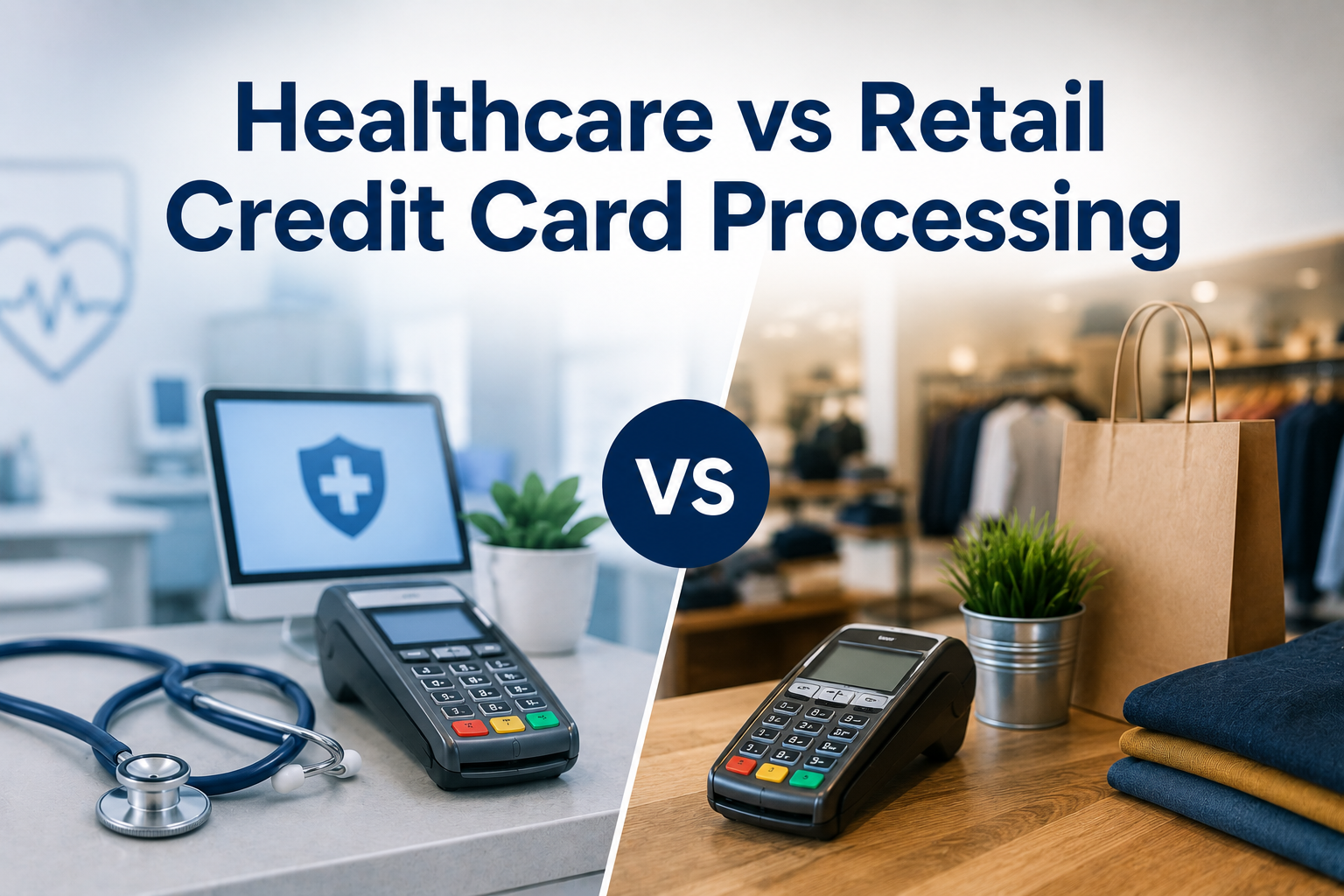
A retail-oriented merchant account handles the first well and treats the rest as an afterthought. That is the gap most practices eventually run into.

Where Requirements Differ by Practice Type

The common core above applies everywhere in healthcare. What changes is the emphasis, and getting this wrong is how practices end up paying for features they never use while missing the one they need.

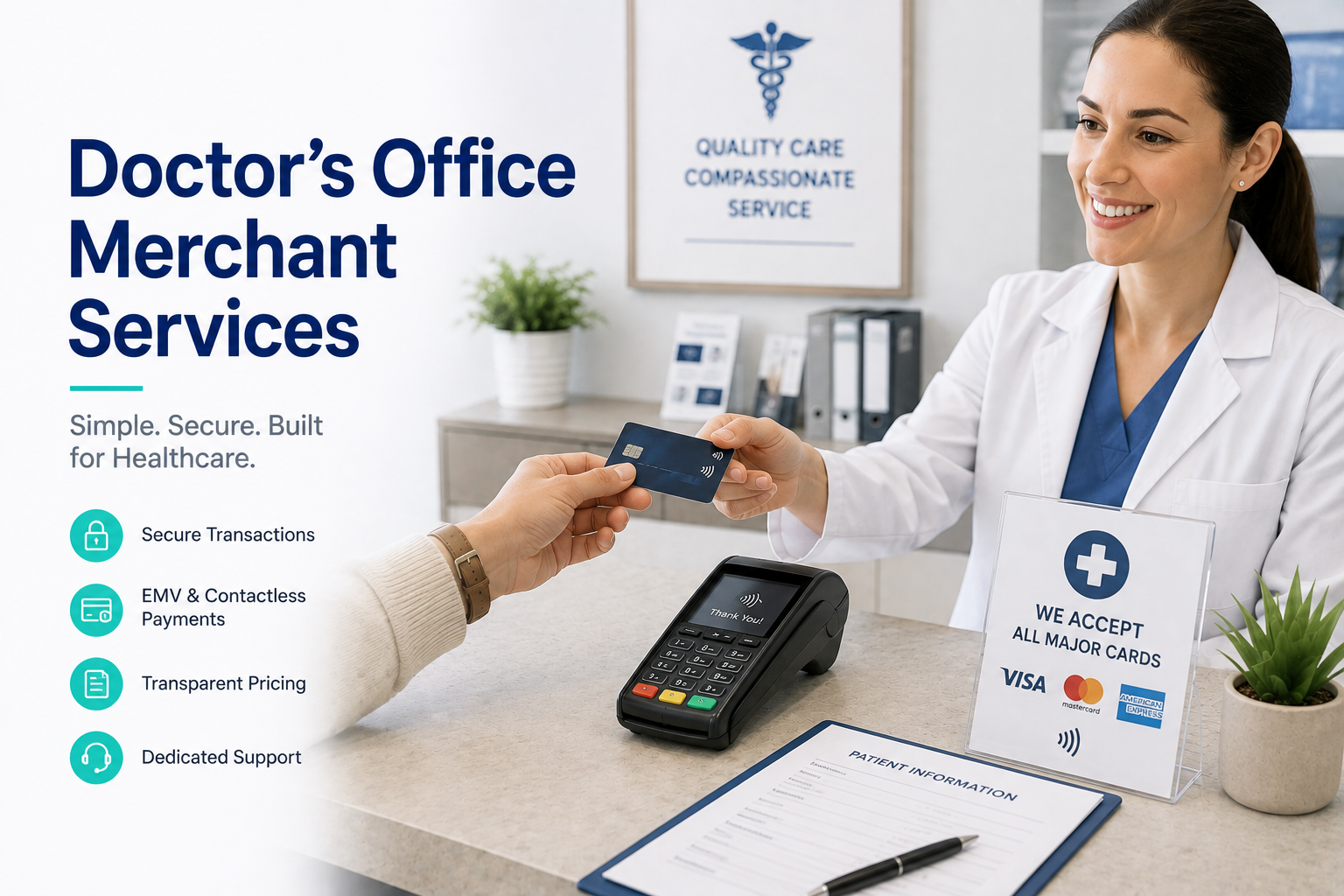
Medical practices deal with the widest gap between the date of service and the date of payment, because so much depends on what the payer covers. The priority is collecting remote balances easily and keeping card data secure across a longer billing cycle. Our guide to credit card processing for medical practices goes deeper here, and you can see how it works in practice on our medical merchant services page.

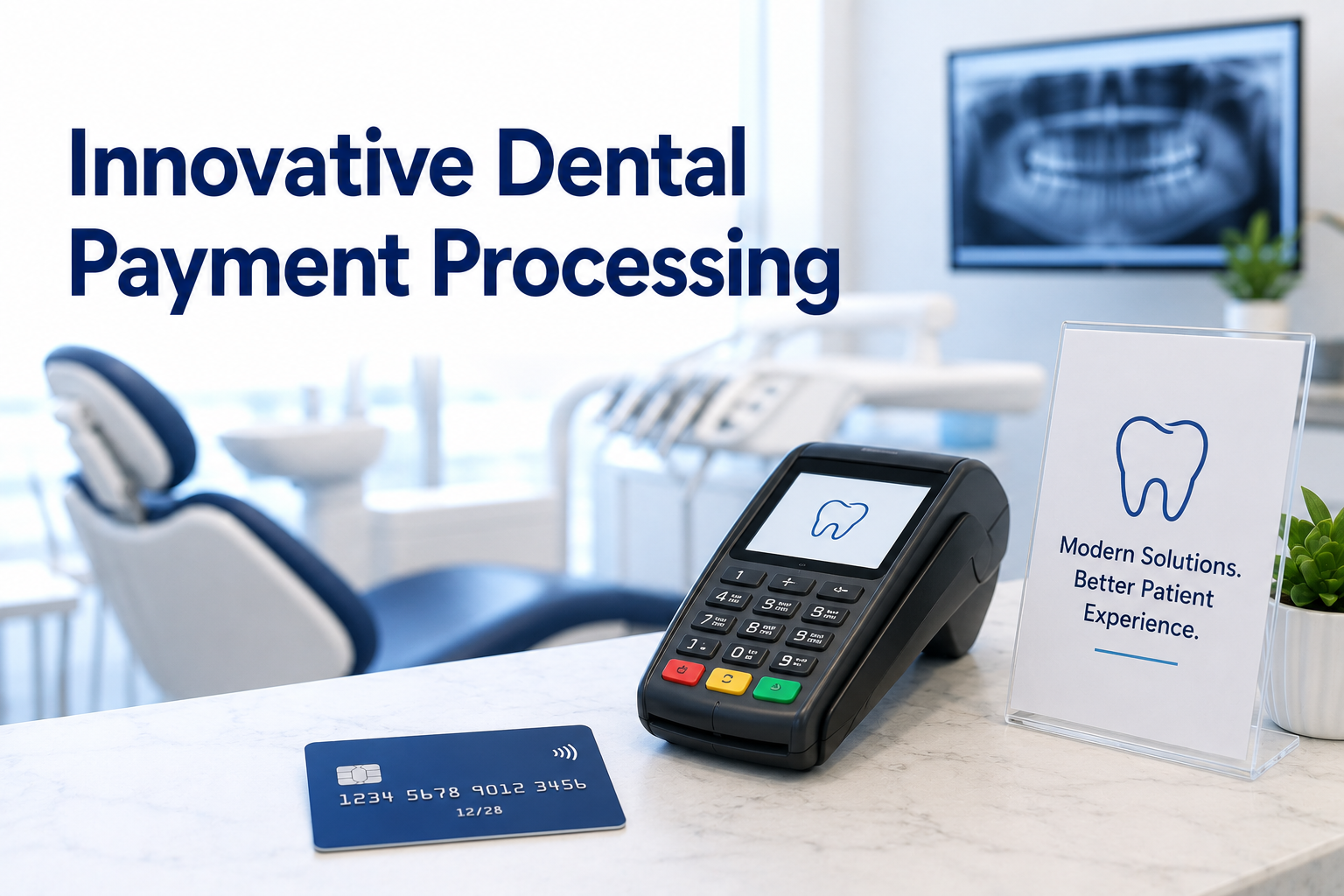
Dental practices see the widest range of transaction sizes, from a small hygiene copay to a five-figure restorative or orthodontic case. Stored cards and staged payments matter more here than anywhere else, along with pricing that does not punish the practice for larger cases. See our dental payment processing page for how that applies day to day.

Veterinary clinics collect nearly everything at the time of service, often at emotionally difficult moments, and frequently outside normal hours. Speed, reliability, and the ability to take a payment from wherever the client happens to be standing carry more weight than long billing cycles. Our veterinary credit card processing page covers that setting.

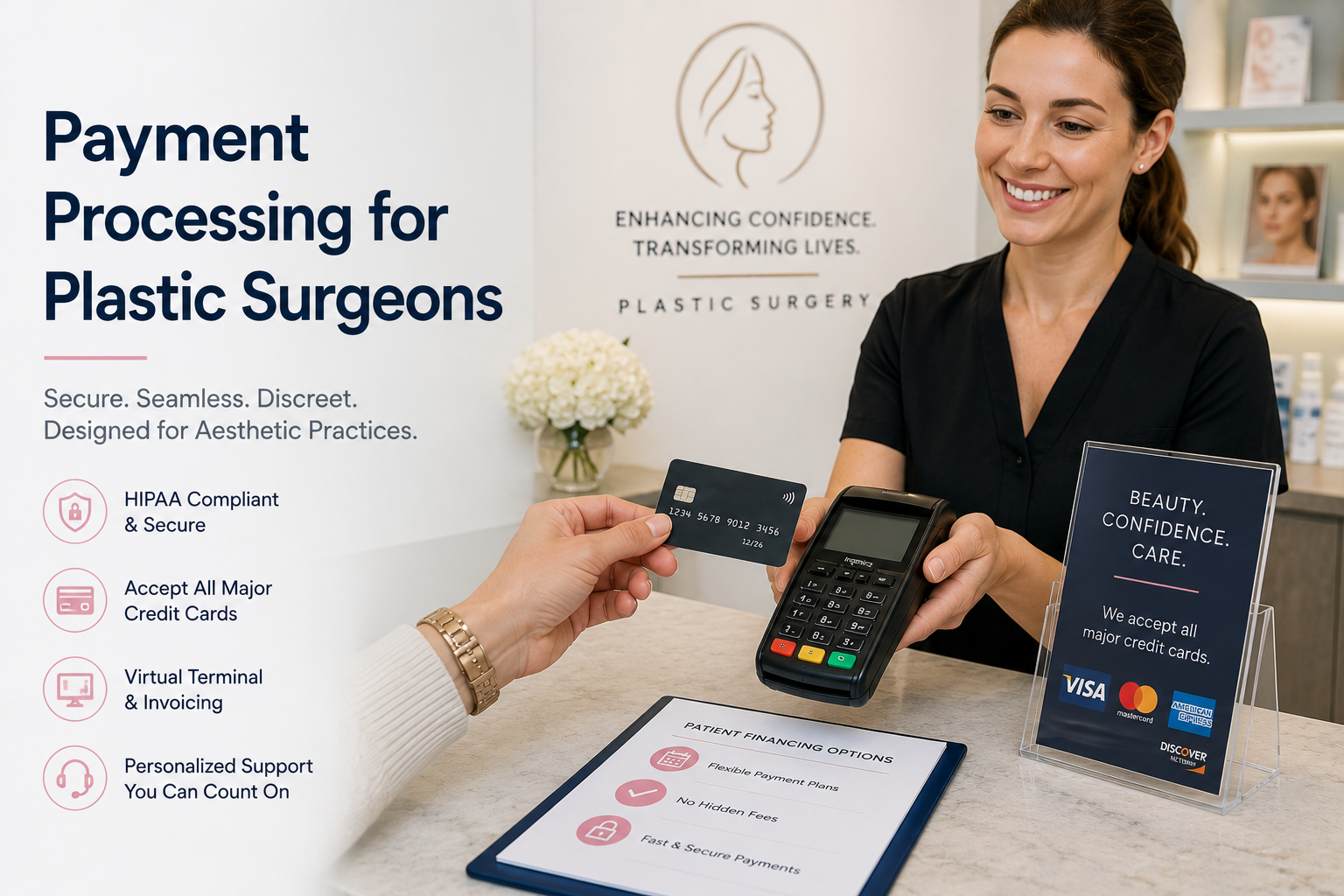
Specialty and elective providers handle fewer transactions at higher values, which makes percentage-based pricing especially expensive and payment plans especially important.

Features Worth Insisting On

Across every one of those settings, the same short list separates a processor equipped for healthcare from a generic one:

  • Security and PCI compliance: Payment data encrypted in transit and tokenized in storage, so card and banking details are protected and never kept informally by staff.
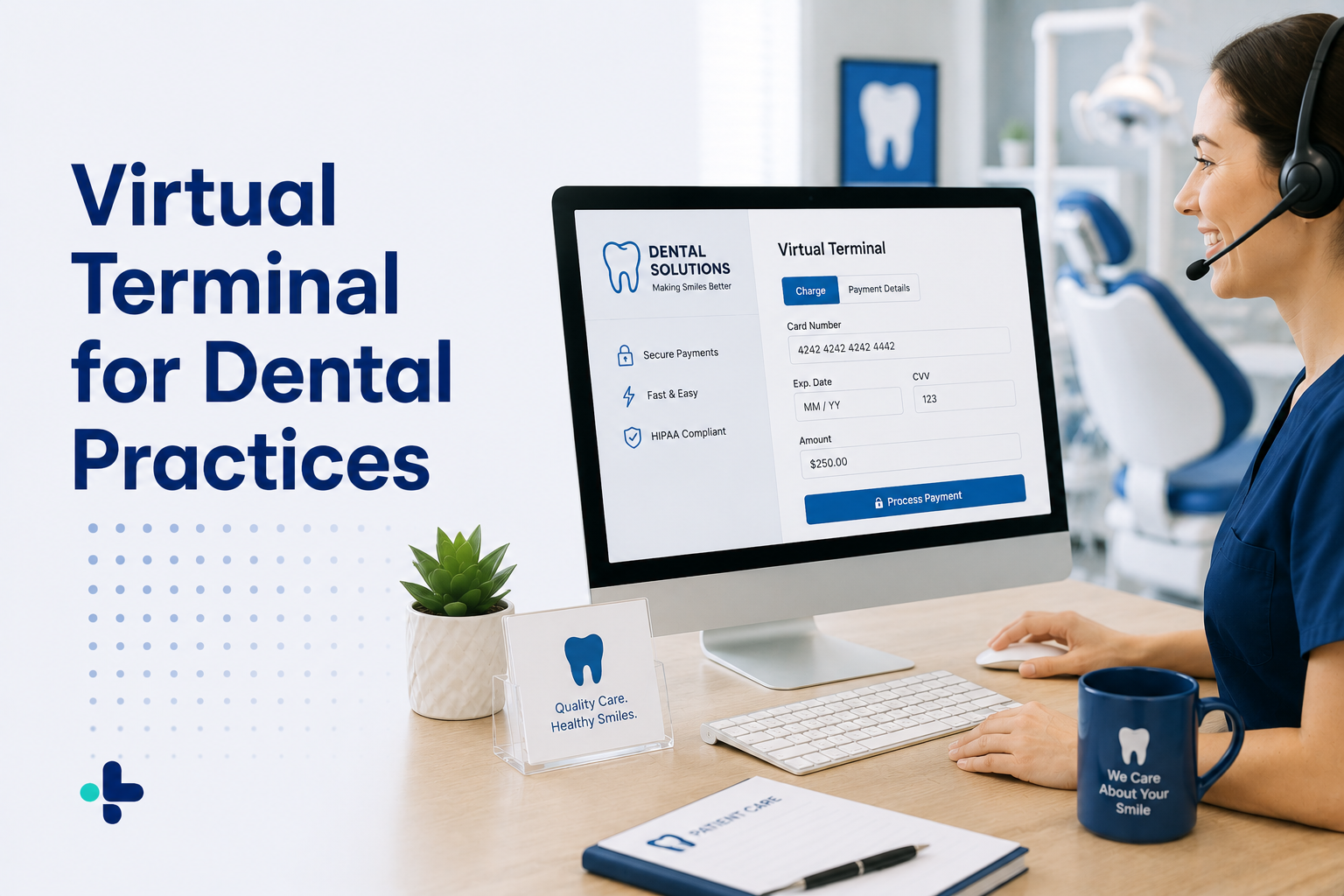
  • A web-based virtual terminal: Taking payments from any computer, tablet, or smartphone, so the front desk, the billing office, and a second location all work from one system with no dedicated hardware to buy or maintain.
  • Stored cards for recurring and staged payments: Tokenized storage makes payment plans and membership billing routine instead of a manual task someone has to remember.
  • ACH and electronic check support: Larger balances often move by bank transfer, and keeping those in the same workflow avoids a second reconciliation process.
  • Invoices and online payment options: Post-insurance balances get paid faster when a patient can settle them from an email or a payment page.
  • Receipts and transaction management: Printing or emailing receipts and reviewing full history in one place keeps month-end simple.
  • Multi-location roles and permissions: Growing groups need every location on one platform, with access levels matched to each staff member’s role.

These are the capabilities behind BlueYonder’s merchant services for healthcare providers, rather than a set of add-ons assembled from separate vendors.

What Healthcare Credit Card Processing Actually Costs

Most healthcare credit card processing is priced as a percentage of every transaction, which has an awkward consequence: the more you collect, the more you pay, even though nothing about the service changed. A practice collecting $50,000 a month hands over a four-figure sum annually before a single additional fee is counted. Collect twice as much and the number doubles.

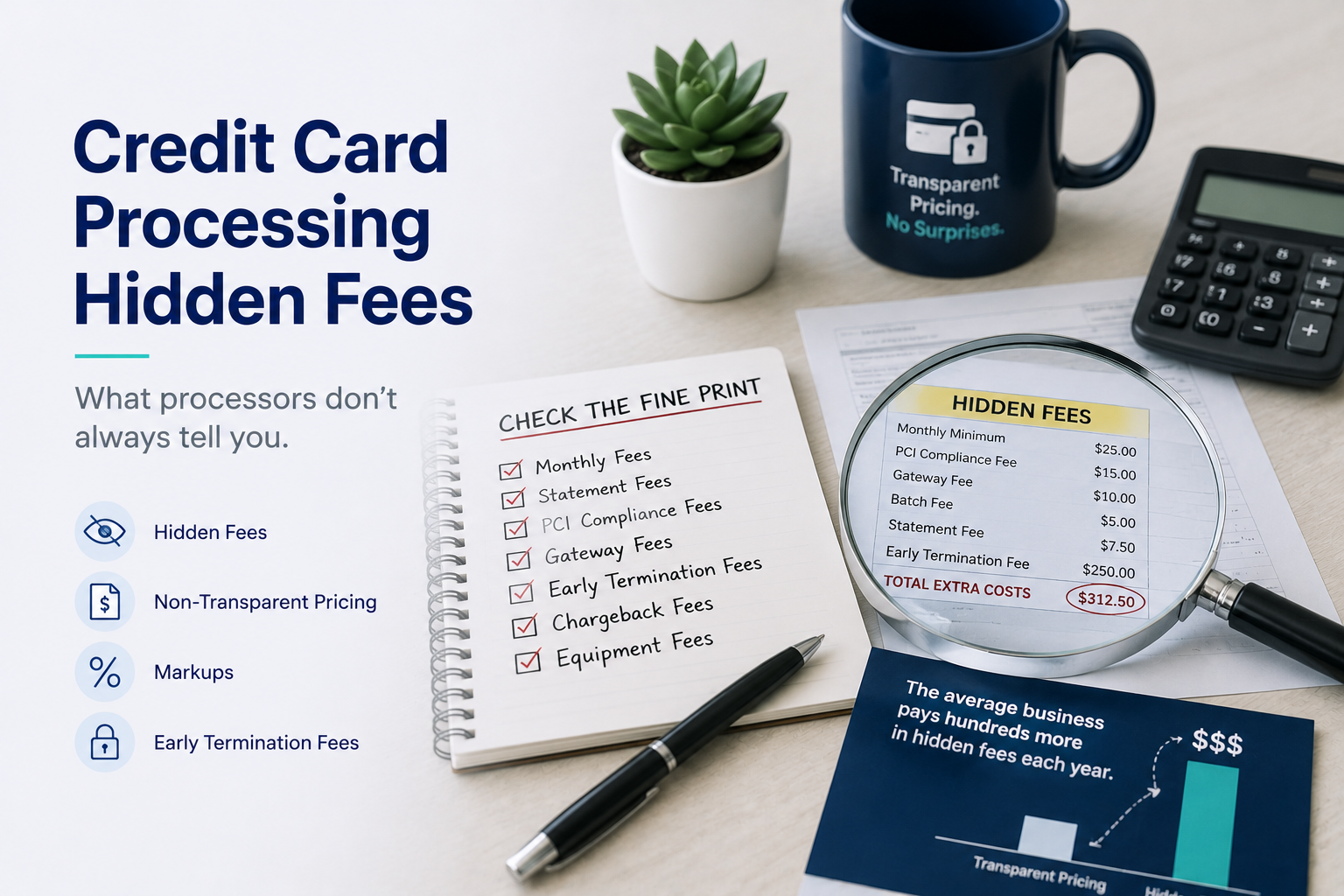
Those additional fees are usually where the real damage is. Statement fees, monthly minimums, PCI fees, equipment leases, and cancellation penalties appear routinely on healthcare processing statements and rarely appear in the original quote. If reconciling your statement against what you expected to pay has ever taken longer than a few minutes, you have already met this problem.

Flat-rate pricing takes the opposite approach. Some providers, including BlueYonder, charge one flat monthly rate for processing rather than a share of each transaction, so the cost is the same in a slow month as in a record one. Budgeting becomes a single predictable line, and growth stops carrying a penalty. What a transparent provider leaves out matters equally: no long-term contract, no cancellation fee, no equipment charge, and no line items that appear without explanation.

How to Evaluate a Provider

Four questions will tell you most of what you need to know.

Can I see every fee in writing? Transaction, monthly, statement, PCI, equipment, cancellation. An answer that runs long or arrives with asterisks is itself the answer.

What are the contract and cancellation terms? A provider confident in its service does not need a penalty to keep your business.

Do you work with practices like mine? A provider handling healthcare accounts daily already understands stored cards, payment plans, and the privacy expectations around patient billing. You should not have to explain your requirements twice.

How quickly can I reach a person? Payment problems happen mid-appointment, not at a convenient hour.

It is also worth understanding where the industry is heading before you sign a multi-year agreement. Our look at the future of medical payments covers the direction payment technology is moving in healthcare.

Choosing Healthcare Merchant Services That Fit

The right healthcare merchant services come down to three things: security your patients can trust, tools that match how your specific setting collects money, and pricing you can predict before the statement arrives. Practices that get those right stop thinking about payments altogether, which is the point.

BlueYonder Corp works with medical, dental, veterinary, and specialty providers on flat monthly pricing, with no contracts, no hidden fees, and a virtual terminal your team can use from the first day. Call 800-270-9285 and one of our account specialists will walk you through what switching would look like for your practice.

Dental Credit Card Processing: What Dental Practices Need to Know

Dental credit card processing sits in an unusual spot. Part of the bill is covered by insurance, part is collected from the patient at the front desk, and the amounts swing from a $40 copay to a five-figure treatment plan. Few other businesses collect money in so many different shapes, and that variety is exactly what makes your choice of payment processor matter more in a dental practice than it does in most industries.

It also means the cost of accepting cards is rarely as small as it looks on a rate sheet. Most processors take a percentage of every transaction, so the bigger the case, the more it costs your practice simply to get paid for it. Over a year, that adds up to a number worth paying attention to.

This guide covers how payments actually move through a dental practice, what processing really costs, the features that matter in a dental setting, and what to ask before you sign with anyone.

How Payments Actually Flow Through a Dental Practice

Before comparing providers, it helps to map the moments when money changes hands. Most dental practices collect in four distinct ways, and each one puts a different demand on your payment system.

Copays at check-out. Small, fast, and high-volume. These need a payment step that does not slow down the front desk while another patient is waiting.

Patient balances after insurance. The claim is processed, the remainder falls to the patient, and now you are collecting days or weeks after the appointment. That means taking payment over the phone, by emailed invoice, or online, not just in the operatory.

Deposits and staged payments on treatment plans. Crowns, implants, orthodontics, and full-mouth restorations are often paid in stages. Your system needs to hold payment details securely between visits so staff are not re-entering card numbers or keeping paper authorizations in a drawer.

Membership and recurring plans. In-house membership plans have become common, and they only work when billing runs automatically on a schedule.

A processor built for retail handles the first of these well and the other three badly. That gap is where most dental practices lose time.

What Dental Credit Card Processing Really Costs

Percentage-based pricing has an awkward property in dentistry: it punishes exactly the cases you want more of. A routine hygiene visit costs a few dollars to collect. A large restorative case costs a meaningful multiple of that, on the same swipe, with the same effort from your processor. Nothing about the service changed; only the amount did.

Then there is everything layered on top of the headline rate. Statement fees, monthly minimums, PCI fees, equipment leases, and cancellation penalties routinely appear on dental processing statements, and they are the reason a “2.6% plus a dime” quote so rarely matches what actually leaves the bank account. If reconciling your statement against what you expected to pay has ever taken more than a few minutes, you have met this problem.

We break the individual fee types down in our guide to low cost dental credit card processing. The short version is that the pricing model you pick has more effect on your annual total than any rate you negotiate inside a bad one.

Features That Matter in a Dental Setting

Whether you run a single operatory or several locations, these are the capabilities that separate a processor suited to dentistry from a generic one:

  • Security and PCI compliance: Card and banking data should be encrypted in transit and tokenized in storage, so patient payment details are protected and never held informally by your staff.
  • A web-based virtual terminal: Taking payments from any computer, tablet, or smartphone lets the front desk, the treatment coordinator, and the billing office work from the same system with no dedicated hardware to buy or maintain.
  • Stored cards for treatment plans: Tokenized card storage makes staged payments and membership billing routine rather than a manual task someone has to remember each month.
  • ACH and electronic check support: Larger balances often move by bank transfer. Keeping those in the same workflow as card payments avoids a separate reconciliation process.
  • Invoices and online payment options: Post-insurance balances get paid faster when the patient can settle them from an emailed invoice or a payment page instead of mailing a check.
  • Receipts and transaction management: Printing or emailing receipts and reviewing full transaction history in one place keeps month-end simple.
  • Multi-location roles and permissions: Group practices need every location on one platform, with access levels that match what each staff member should see.

These are the same capabilities behind BlueYonder’s dental merchant services, so a practice is not stitching them together from separate tools.

Why Predictable Pricing Changes the Math for Dental

Ask a practice owner what frustrates them about processing and you rarely hear a specific rate. You hear that the statement is different every month and nobody can explain why.

Flat-rate pricing inverts that. Some providers, including BlueYonder, charge one flat monthly rate for processing rather than a slice of every transaction, so the amount is the same in a quiet August as it is in a record January. Budgeting becomes a single line item, and large treatment cases stop carrying a built-in penalty for being large.

What a transparent provider leaves out matters just as much: no long-term contract, no cancellation fee, no equipment charge, and no line items that appear between statements without explanation.

Questions to Ask Before You Switch

A few questions will separate the specialists from the rest quickly.

What is every fee, in writing? Transaction, monthly, statement, PCI, equipment, cancellation. If the answer runs longer than a page or arrives with asterisks, that is your answer.

What happens if I leave? Contract length and cancellation terms tell you how confident a provider is in its own service. A provider that earns your business monthly does not need a penalty to keep it.

Do you actually work with dental practices? A provider that handles dental accounts daily already understands stored cards, staged treatment payments, and the privacy expectations around patient billing. Our article on why dentist merchant services matter to dental practices covers what that experience looks like day to day, and our guide to secure dental payment processing covers the security side in more depth.

How fast can I reach a human? Payment problems happen mid-appointment, not at a convenient hour.

A Simpler Way to Collect in Your Practice

Good dental credit card processing comes down to three things: security your patients can trust, tools that match how a dental practice actually collects money, and pricing you can predict before the statement arrives. Get those right and payments stop being something your team thinks about.

BlueYonder Corp built its dental payment processing program around that idea, with flat monthly pricing, no contracts or hidden fees, and a virtual terminal your whole practice can use from the first day. Practices in other specialties can read our companion guide to credit card processing for medical practices. When you are ready, call 800-270-9285 and one of our account specialists will walk you through what switching would look like for your practice.

Credit Card Processing for Medical Practices

Credit card processing for medical practices is no longer a back-office detail. Patients now cover a larger share of their healthcare costs directly, through deductibles, copays, and elective procedures, and they expect to pay the way they pay everywhere else: by card, online, or from their phone. That makes your payment setup part of the patient experience, and one of the few operating costs you can meaningfully control.

It is also a cost that scales against you. Most processors charge a percentage of every transaction, so the more your practice grows, the more you pay for the privilege of getting paid. Studies show healthcare providers pay an average of 2.4% per transaction, and for a busy practice that percentage quietly becomes one of the larger line items on the books.

This guide covers what makes payment processing different in a medical setting, what percentage-based fees actually cost, and which features to look for before you choose or switch providers.

Why Medical Practices Have Different Payment Needs

A medical practice is not a retail counter. The way patients pay, and the environment they pay in, creates requirements most generic processors were never built around.

Patient trust comes first. Payments happen alongside sensitive health information, so security cannot be an afterthought: card data needs to be protected in transit and in storage, and your systems need to support the privacy standards healthcare operates under.

Transaction patterns are different too. Practices handle a wide range of amounts, from small copays collected at the front desk to larger bills for procedures and treatment plans. Many practices let patients pay over time, which means the processor needs to store payment details securely and run recurring charges without staff re-entering card numbers every month.

Finally, payments arrive from every direction: in person at check-out, over the phone, through emailed invoices, and online. A processor that only handles one of those channels forces your front desk into workarounds.

What Percentage-Based Fees Really Cost a Practice

Percentage-based pricing sounds small until you do the math on your own volume. A practice processing $50,000 a month at typical rates hands over more than $1,000 of it, every month, before any monthly fees, statement fees, or equipment charges are added. Process $100,000 and the number doubles. Nothing about your costs changed — you simply collected more from patients, and your processor took a larger cut.

The structure of those fees is often the bigger problem. Many practices sit in contracts with tiered rates, hidden charges, inflated equipment costs, and cancellation penalties that make it painful to leave. If you have ever tried to reconcile a processing statement against what you expected to pay, you already know how opaque traditional pricing can be.

We covered specific cost-cutting tactics in how medical practices can save on credit card processing fees — but the short version is that the pricing model you choose matters more than any individual negotiation.

Six Features to Look For in a Medical Payment Processor

Whether you run a solo clinic or a multi-provider group, these are the capabilities that separate a processor built for healthcare from a generic one:

  • Security and compliance: Look for PCI-compliant processing with encryption and tokenization, so card and banking data is protected during the transaction and stored safely for future payments — never sitting in a drawer or a spreadsheet.
  • A web-based virtual terminal: Taking payments from any computer, tablet, or smartphone means the front desk, the billing office, and a provider working from a second location all use the same system, with no dedicated hardware to buy or maintain.
  • Recurring payments and payment plans: Tokenized card storage lets you set up repeat billing for treatment plans, so patients can spread out larger costs and your practice is not chasing balances by mail.
  • ACH and electronic check support: Some patients and payers prefer bank transfers, and larger amounts often move that way. A processor equipped for ACH keeps those payments in the same workflow as card payments.
  • Receipts and transaction management: Printing or emailing receipts and reviewing full transaction history from one place keeps reconciliation simple for your billing staff.
  • Multi-location support with roles and permissions: Growing practices need each location and staff member on the same platform, with access levels that match their responsibilities.

These are the same capabilities BlueYonder builds into its merchant services for medical practices, so a practice does not have to assemble them from separate tools.

Flat-Rate vs. Traditional Pricing: Why Predictability Matters

Most of the frustration practices have with processing comes back to one thing: not knowing what next month’s statement will look like. Percentage-based pricing moves with your volume, and the extra fees layered on top move on their own schedule.

Flat-rate pricing takes the opposite approach. Some providers, including BlueYonder, charge one flat monthly rate for processing — the same amount whether your practice has a slow month or a record one. Budgeting becomes trivial, statements become readable, and growth stops carrying a penalty. For practices with high or seasonal volume, the difference between a percentage and a flat rate is not a rounding error; it is thousands of dollars a year staying in the practice.

Just as important is what a transparent provider leaves out: no contracts that trap you, no cancellation fees, no equipment charges, and no surprise line items invented between statements.

How to Evaluate Providers Before You Switch

When you compare providers, a few filters separate the specialists from the rest quickly.

Start with healthcare experience. A provider that works with medical practices every day already understands secure card storage, payment plans, and the privacy expectations that come with patient billing — you should not have to explain your requirements twice. Our guide to credit card processing for medical offices goes deeper on what that specialization looks like in practice.

Then look at pricing the way an auditor would. Ask for every fee in writing: transaction costs, monthly costs, equipment, statements, PCI, cancellation. If the answer takes more than a page or comes with an asterisk, you have learned something important about the next three years of statements.

Finally, weigh support and flexibility. Payment problems do not wait for business hours, and neither should your processor. Favor providers with responsive support, and be wary of anyone who needs a long-term contract to keep your business. A provider confident in its service does not need an exit penalty to retain you.

A Simpler Way for Your Practice to Take Payments

The right credit card processing for medical practices comes down to three things: security your patients can trust, tools that fit how a practice actually collects payments, and pricing you can predict. Get those right and payments fade into the background, which is exactly where they belong.

BlueYonder Corp built its medical credit card processing program around that idea — flat monthly pricing, no contracts or hidden fees, and a virtual terminal your whole practice can use from day one. Call 800-270-9285 and one of our account specialists will walk you through exactly what switching would look like for your practice.

The Benefits of Offering Flexible Payment Options in Chiropractic Clinics

Offering multiple payment methods is no longer a bonus but a necessity. This is especially true for chiropractic clinics. By providing more ways to pay, you can reach a broader group of patients and keep them coming back. One reason for this is that 60% of patients are more likely to choose a healthcare provider that offers flexible payment options. When patients don’t have to worry about how they’ll pay, they’re more likely to stick with their treatment and recommend your clinic to others.

At BlueYonder Corp, we help chiropractors simplify their payment systems through card processing for chiropractors. We make it easy for you to offer different payment options that suit your patients’ needs. By adopting these solutions, your chiropractic clinic can improve patient satisfaction, boost revenue, and build lasting trust.

Now, let’s explore the benefits of flexible payment options and how they can transform your clinic’s operations.

Dental Credit Card Processing

The Benefits of Offering Flexible Payment Options

Offering flexible card processing for chiropractors can significantly improve patient satisfaction and outcomes. Let’s take a closer look at how it positively impacts both patients and clinics:

  • Better Patient Satisfaction

When chiropractic clinics offer flexible payment options, patient satisfaction increases. Payment plans, insurance integration, and subscription models ease the financial burden on patients, reducing stress and encouraging them to stick with their care. Satisfied patients are more likely to return and remain loyal to the clinic. By partnering with BlueYonder Corp, clinics can provide smooth, transparent payment systems with no hidden fees.

  • Greater Accessibility and Affordability

Flexible payment options make chiropractic care more accessible and affordable for a wider range of patients. Clinics can offer various payment methods to assist those who can’t pay all at once. BlueYonder Corp provides easy-to-use, secure payment systems that simplify payment plans, ensuring no patient is turned away due to financial concerns.

Payment options include:

  • Installment plans for larger payments
  • Insurance integration for easier reimbursements
  • Subscription models for ongoing care
  • Discounts for early payments or upfront commitments
  • Higher Revenue Potential

Flexible payment options can increase chiropractic clinic revenue. BlueYonder’s low-cost, transparent chiropractic card processing system helps clinics save on fees. These savings can be reinvested in the business or passed along to patients. More accessible payment options can also attract new patients and create steadier cash flow.

  • More patients due to accessible payment options
  • Steady revenue from installment payments
  • Savings on fees with BlueYonder’s transparent system
  • Attracting new patients who prefer flexible plans

Better Care Through Payment Flexibility

Offering flexible payment options in chiropractic clinics benefits both patients and practitioners. When treatments are more affordable, a wider range of people can access care, improving retention rates. Payment options like installment plans or discounted packages remove financial barriers, making it easier for patients to receive necessary treatment.

This approach fosters patient loyalty and improves the clinic’s financial stability. When patients can easily manage their payments through efficient Chiropractic Card Processing, they are more likely to stick with their treatment plans, leading to better health outcomes over time. 

BlueYonder provides clinics with just that. As personalized healthcare becomes increasingly important, offering flexible payment options demonstrates your clinic’s commitment to patient care, setting you apart from competitors.

How Medical Practices Can Save on Credit Card Processing Fees

Did you know that medical practices in the U.S. spend millions every year on credit card processing for medical practices. Studies show healthcare providers pay an average of 2.4% per transaction. While these fees might seem small, they can add up quickly, cutting into your practice’s profits. But what if you could reduce or even eliminate these costs?

By improving your payment processing methods, you can save a significant amount of money that could be better used to grow your practice. BlueYonder Corp offers customized payment solutions that help medical professionals reduce medical credit card processing fees, increase transaction efficiency, and boost patient satisfaction. Choosing the right provider and making simple adjustments can help you start saving and focus on what truly matters: providing excellent care.

Now, let’s explore practical tips and strategies that can help your practice save on processing fees. Plus, see how BlueYonder Corp can make a noticeable difference for your business.

Medical Practices Can Save on Credit Card Processing Fees

How Medical Practices Can Save on Credit Card Processing Fees

Medical practices often face higher credit card processing fees due to outdated or overly complex systems. Let’s look at a few different ways you can save on credit card processing for medical practices:

  • Streamline Payment Processing to Avoid Overcharges

Switching to a more efficient payment processor, like BlueYonder Corp, which specializes in simplifying merchant services, can reduce unnecessary markups. Blue Yonder’s transparent pricing model eliminates hidden fees, helping medical practices save significant amounts annually by avoiding inflated costs associated with traditional credit card processors.

  • Leverage Customized Solutions for Specific Needs

Every medical practice has unique requirements for payment processing. BlueYonder Corp partners with each merchant to understand their specific needs and tailor a solution that works for them. Instead of a one-size-fits-all approach, Blue Yonder’s program focuses on reducing processing fees by offering customized setups for different business verticals, including healthcare.

  • Lower fees through tailored agreements
  • Eliminate unnecessary service charges
  • Improve billing efficiency to save time and resources
  • Take Advantage of Transparent Pricing and No Hidden Fees

One of the most significant benefits of BlueYonder Corp’s merchant processing program is its transparency. Many medical practices find themselves stuck in contracts with hidden fees, inflated equipment charges, and surprise cancellation fees. Blue Yonder’s program removes these obstacles with a simple, straightforward pricing structure: no contracts, no cancellation fees, and no equipment fees.

Turning Smart Strategies Into Real Savings

You can lower your medical credit card processing fees by applying a few straightforward strategies. Start by negotiating lower rates and choosing cost-effective payment processors. Look into flat-rate pricing or providers with competitive fees to improve your bottom line and enhance efficiency.

Another effective approach is to switch to integrated billing systems. These systems automate payments, reducing administrative costs. By adopting better payment methods and technology, you can save money and pass those savings on to your patients, creating a smoother financial experience for everyone. Contact BlueYonder today and start Implementing these strategies to reduce fees and make your practice more efficient and patient-focused.

Why Credit Card Processing Is Crucial for Modern Dental Practices

A vast majority of customers, including dental patients, prefer to pay with credit cards. Put simply, these cards are easy, convenient, and safe to use, which makes them a preferred form of payment. Their usage has become universal and spans across industries, including dental businesses. It means credit card processing for dentists has become an essential component of running a modern medical practice. This blog will further discuss how it benefits both patients and practitioners by creating an efficient payment experience.

How Does Credit Card Processing Benefit Dental Practices?

Credit card processing for dentists can enhance patient loyalty, increase revenues, and also make all operations streamlined. This helps set up the dental practice for long-term success. Additional benefits include:

Improved Patient Experience

Card processing for dentists can enhance the overall patient experience with convenience and flexibility. It eliminates the need for these dentists to carry cash or write checks when patients have the option to pay with credit cards, making the payment process swift and effortless. 

The ability to make quick payments often reduces the stress associated with medical expenses. Patients can easily focus on their treatment options and recovery processes without facing any difficulty with the payment process. This improved experience leads to higher patient satisfaction and prompts them to return for future services at the same dental care clinic.

Increased Revenue and Cash Flow

With credit card processing, no one has to wait for checks or worry about late payments. This steady cash flow process makes it easier for dental professionals to manage their finances and invest in new equipment or services if needed.

Moreover, patients might be more willing to go for higher-end treatments if they can pay with credit cards. Knowing they can use their credit limits or fragment their payments makes it easier for them to choose more expensive dental procedures. This flexibility leads to higher revenue as more patients take advantage of the easy payment options offered by dental clinics.

Efficient Operation Process

Unlimited card processing for dental practices can make all operations run smoothly. Automated transactions mean the staff spends less time on any kind of billing and chasing payments. This enables them to focus more on patient care and other important medical tasks.

Modern credit card processing solutions also offer excellent security features to protect dental practices from fraud and keep everyone in line with industry standards. This extra security helps keep finances safe and makes all patients feel confident that their respective payment information is secure. 

Choose the Best Credit Card Processing Solutions

Card processing helps simplify dental organizations’ financial records, making bookkeeping and accounting much easier. Accurate and automatic transaction records can reduce errors and give professionals a clear picture of their organization’s financial health.

Blue Yonder Corp offers the highest quality options associated with credit card processing for dental practices. You can leverage their advanced technology and excellent support to meet and exceed your patients’ expectations. Partner with the company to choose a secure and reliable solution that helps your dental practices grow. 

How Merchant Services Help Medical Practices Reduce Billing Time and Costs?

Merchant services for medical practices help meet the needs of healthcare providers in several ways. These are efficient payment processing systems and financial solutions for various industries. Clinics, hospitals, and other medical facilities can easily leverage these services for better billing time and costs. Medical merchant processing services enable all institutions to process payments from patients, insurance companies, and other entities securely. 

The most common merchant services include billing and reporting services, fraud protection, customer service, and other relevant features. They ensure the expansion of numerous payment options and also help streamline operations.

Benefits of Merchant Services for Medical Practices

Merchant services play a significant role in medical practices as they offer doctors a more secure and convenient way to process payments. This helps reduce the administrative burden associated with other traditional payment methods. Doctors can utilize merchant services to focus more on providing quality patient care without the stress of managing payment transactions manually. Here is an overview of the benefits associated with medical merchant processing services:

Secure Payment Processing

Merchant services leverage artificial intelligence (AI), machine learning (ML), and other relevant technologies to offer robust security measures to medical practices. This helps protect sensitive patient and financial data and also compliance with industry regulations. The increasing threat of cyberattacks already makes it mandatory for all medical practices to prioritize the security of their respective payment transactions.

Flexible Payment Options

The ability to accept various payment methods enhances convenience for patients who can use credit cards, debit cards, and mobile wallets. This flexibility enables everyone to choose their preferred payment methods, making the process more user-friendly and efficient.  

Integration Capabilities

Efficient integration with existing practice management systems helps optimize workflow efficiency and minimizes manual data entry processes. Here, the situation alters when the payment information syncs with patient records automatically. This eliminates the need for double data entry, saves time, and reduces the risk of errors.

24/7 Customer Support

Knowledgeable support is always crucial, ensuring all issues are resolved on time to minimize disruptions to patient care. Merchant services for medical practices enable them to operate 24/7, and having access to reliable customer support ensures that they can address all payment-related issues promptly. This, in turn, allows doctors to focus on their patients.

Best Merchant Services for Medical Practices

Merchant services for medical practices streamline billing processes and increase operational efficiency. They are a must-have for all medical practices across regions to accept payments securely. It helps provide patients with the most convenient payment options. This is how the use of merchant services provides an easy and efficient way for all medical practices to manage billing and payment processing.

Are you already looking for the most efficient merchant services for your medical practice? If yes, consider visiting Blueyonder Corp, which provides the fastest and easiest merchant services that can meet the unique needs of all medical practices.

The Role of Credit Card Processing in Improving Patient Payment Options

Studies show that 73% of healthcare providers report waiting at least a month for patients to settle their bills. This delay in payment results in cash flow disruption. Since patients are also looking for flexible ways to manage their expenses, credit card processing for medical practices stands out as a viable solution. By offering this option, healthcare providers can facilitate a smooth payment collection process and enhance the patients’ experience.

Let’s explore the role of credit card processing in improving patient payment options and why it’s considered a smart move in the healthcare industry.

Why Do Patients Need Medical Credit Card Processing?

As we know, healthcare payments often involve high costs that patients may find difficult to pay upfront. Traditional payment methods, such as cash or checks, have become less convenient.

With the rise in high-deductible health plans and out-of-pocket expenses, many patients prefer flexible payment options like credit cards to manage their medical bills. Thus, there is a growing demand for medical credit card processing. This used to be a lengthy process with complex configurations and authorization delays. However, the scenario has changed greatly!

Benefits of Credit Card Processing 

Below are some of the benefits of employing a credit card processing system:

1. Convenience

Patients value convenience when managing medical expenses. Credit card processing allows them to make secure payments, whether in person, online, or over the phone.

2. Faster Revenue Collection

Delays in payments can disrupt cash flow for medical practices. Credit card processing accelerates the revenue cycle by enabling instant payments, reducing the time spent collecting and managing outstanding bills. By integrating credit card processing systems with existing billing software, payments can be tracked easily.

3. Security 

Undoubtedly, data security is paramount. Modern medical credit card processing systems are equipped with advanced encryption technologies and PCI compliance standards to protect sensitive patient information. This helps medical practices mitigate the risks of data breaches and build trust with patients.

4. Patient Support 

With the surge in telehealth services, having a proper credit card processing system is essential. Patients who access remote healthcare services expect secure online payment options.

Overall, the secure credit card processing options enhance patient satisfaction and encourage them to consult specific doctors and use healthcare facilities without difficulty.

How to Choose the Right Credit Card Processing System?

When choosing a credit card processing solution, healthcare service providers should prioritize features that weigh the pros and cons of the available options and opt for the one that aligns with their requirements. Ideally, they can look for the given features:

  1. Compliances: The system must adhere to the regulations and compliances, such as HIPAA Compliance, that protect patient information.
  2. Recurring Billing: It should support automated payments for installment plans or ongoing treatments (if any).
  3. Multi-Channel Payments: Payments can be accepted online, in person, or via mobile devices.
  4. Transparent Fees: The system must have clear pricing structures to avoid hidden costs.
  5. Integration Capabilities: The solution should integrate with existing electronic health records (EHR) and billing systems.

Consequently, choosing the right credit card processing partner is essential to ensure fruitful results. 

Conclusion

By adopting medical credit card processing, healthcare providers can create a win-win situation for themselves and their patients. They can ensure convenience, security, and financial stability. The key is to create a more patient-focused payment experience!

You can also visit Blue Yonder Corp and learn more about their services. From recurring billing options to advanced data security, Blue Yonder Corp empowers medical practices to enhance patient payment options and optimize their revenue cycle.

How to Choose the Right Provider for Your Medical Credit Card Processing

For any healthcare practice, whether it’s a huge hospital or a little private dentist office, finding the right provider for Medical Credit Card Processing is key. As the landscape grows more and more digital, patients come to expect their payment experiences to be smooth, coordinating with their convenience. An enormous breach takes place in the expectation of medical practices, which in turn requires a provider offering secure, efficient, and cost-effective solutions tailor-made for their needs. This article provides a guideline for the most important considerations.

Know Your Practice Needs

Regardless of how distinctive your medical practice is, the company that processes medical payments for you should also be convenient and easy. 

Evaluate Payment Volume and Frequency

The first thing to do before getting the appropriate medical credit card processing provider for your practice is to understand the volume and frequency of payments. Hence, smaller practices, such as Merchant Services for Dental Practices, need more simplified solutions that are easy to handle and effective. Knowing your needs will guide you in picking a provider that offers just the right services without the unnecessary features.

Consider Your Patient Demographics

Knowing your patient demographics will also guide your decision on a payment processing provider. For example, younger patients may consider digital payments, while older ones may still be traditional about credit/debit card payments. Make sure the payment processing provider has a wide range of payment methods that meet the preferences of your patients. It is also of greater importance to consider  Merchant Services For Medical Practices, which cater to a varied number of people.

Evaluate the Security Features

Ensure you assess security features such as compliance and fraud prevention that will let you make your decision from an informed standpoint.

Compliance with Industry Standards

The need for security mainly recognises medical credit card processing for medical practice because of the sensitive information involved in such transactions. First off, the service provider you select must utilise payment card industry data security standard (PCI DSS) compliance. Medical Merchant Processing providers who sweat over being security compliant can help protect your practice from potential breaches and legal liabilities.

Advanced Fraud Detection

Go for a vendor that offers advanced fraud detection and prevention features. Medical practices are highly sought-after targets for fraud, and using a provider with strong security features can be a needed step in reducing this risk. Real-time transaction monitoring, tokenisation, and encryption are just some of the integrated protection features that provide surety in Medical Credit Card Processing.

Integration Capabilities

Integration with your existing systems is key for smooth operations in any medical practice. The best options will be those that integrate with the hardware and software you already have.

Compatibility with Systems Already in Place

The payment processing provider you choose must then easily integrate with the currently used systems. Merchant Services For Medical Practices should sync with most medical software solutions to provide a unified way of transactions, billing, and patient records from one place more seamlessly and efficiently.

Scalable Solutions

As your practice grows, your payment processing needs may change. You’ll want to ensure your provider can scale services so that you can upgrade service when needed without a large period of downtime or disruption. Whether you’re growing the size of your practice or adding new services, your Medical Merchant Processing provider should enable these changes.

Estimate costs and fees

Cost plays a big part in how a payment processing provider is selected. By comparing costs and fees, you can select a provider that is both affordable and of high quality, giving you the best return on your investment.

Transparent Pricing Structures

It’s very important to know the cost associated with processing medical credit cards. Find providers with clear price structures: no hidden costs, clear pricing, and no surprises. Disguised fees, in this case, should be carefully noted with Merchant Services For Dental Practices and other small practices in order for them to be efficient in cost.

Value for Money

But cost is only one part of the equation; what’s just as important is the amount of value the investment will confer. It might often be more than acceptable to pay a bit more for a provider that gives you much better customer support, tighter security, or richer integration capabilities. Measure what you get in terms of value to make sure the product you end up with is the right exposure of cost to quality.

Customer Support and Training

Thorough training and dependable customer support are two important considerations for the effective operation of the payment processing system. The following are the things you might wish to consider when selecting a provider.

24/7 Availability

This is needed for your Medical Credit Card Processing to be running smoothly. Issues may arise any time, and customer support at 24/7 will sort out all problems within a short time, minimizing downtime. Look for a provider that extends total support even through calls, email, and live chats to ensure that your needs are attended to whenever they come by.

Training and Onboarding

But adequate training and good onboarding are crucial when your staff members are new to your payment processing solution. Choose a provider with a support process that will engage your team with its training programs. This support will ensure a reduction of the learning curve so your practice can be off and running at full throttle, processing payments from day one.

Your choice of medical credit card processing will have a significant impact on the efficiency, the security of transactions, and the patient’s satisfaction with your practice. Taking into account factors such as volume, security features, possibility of integration, cost of transactions, and customer support associated with the choices will allow you to make an informed decision that services your unique needs.

Whatever the size, right from multispecialty hospitals to a single chair dental setup, investment in the right provider for the Medical Merchant Processing solution will bring in a smooth, secure, and cost-effective payment processing process, ultimately rising into the overall success of any practice. Contact Blue Yonder for all your credit card processing needs! We guarantee to make the payment procedures at your medical practice easier. 

Why Should Small Businesses Choose Flat Fee Merchant Services?

Running a small business comes with many challenges, but managing your payment processing doesn’t have to be one of them. Flat fee merchant services offer a simple, predictable way to handle your credit card transactions. Instead of dealing with fluctuating fees, you pay the same amount every month. This makes it easier to plan your budget and keep your finances in check.

With flat fee services, you don’t have to worry about hidden charges or surprise costs. Everything is straightforward, allowing you to focus on what you do best—growing your business. Whether you’re just starting or looking to simplify your operations, flat fee merchant services can be a game-changer.

They provide the financial stability and peace of mind you need to succeed. If you’re ready to take control of your payment processing and boost your bottom line, flat fee services might be the perfect fit for your business.

Key Benefits of Flat Fee Merchant Services

Choosing the right merchant service can make a huge difference for your small business. With flat fee merchant services, you get a clear and predictable way to handle your credit card transactions. 

Unlike traditional services that charge a percentage of each sale, flat fee options offer consistent costs that help you manage your finances more effectively. 

Plus, with flat rate credit card processing, you can enjoy the benefits of unlimited credit card processing without worrying about hidden fees or unexpected charges. Let’s dive into the key benefits of this approach.

Cost Predictability

With flat-fee merchant services, you always know what to expect when it comes to costs. You pay the same amount each month, no matter how much you sell. This consistency makes it easier to plan your budget. Unlike traditional percentage-based fees, where costs can go up and down based on your sales, flat fees stay the same. You don’t have to worry about surprise charges eating into your profits.

This predictability is a game-changer for small businesses. You can plan your finances with confidence, knowing exactly how much you’ll spend on merchant services. This stability helps you manage cash flow better, and you’re less likely to run into financial stress. When you know what’s coming, you can focus more on growing your business and less on managing fluctuating costs.

Simplified Fee Structure

Flat-fee merchant services come with a simple, straightforward fee structure. You don’t have to deal with complicated calculations or try to figure out what different charges mean. Everything is clear and easy to understand. This simplicity is a big plus for small business owners like you, who have a lot on their plate already.

With flat fees, you avoid hidden charges and unexpected costs that can pop up with other types of merchant services. You get what you signed up for. This transparency gives you peace of mind and helps you avoid financial surprises. When you know what you’re paying, you can focus on what matters most—running your business smoothly and efficiently.

Better Profit Margins

Flat fees can help you keep more of your hard-earned money. When you’re processing a lot of transactions, percentage-based fees can add up quickly and cut into your profits. But with a flat fee, you pay the same amount no matter how much you sell. This can make a big difference, especially if your sales are high.

Let’s say you’re running a busy store with lots of daily transactions. Instead of watching your fees go up with each sale, a flat fee keeps things steady. This means more money stays in your pocket, which you can then reinvest into your business. Whether it’s upgrading equipment, expanding your product line, or marketing to new customers, those extra savings can help you grow faster and stronger.

Plus, with unlimited card processing, you don’t have to worry about reaching any limits. You can process as many transactions as you need without additional fees. This flexibility is especially valuable for growing businesses, as it allows you to scale up without worrying about extra costs eating into your profits. Flat fees not only make financial planning easier, but they also help you maximize your profits. For small businesses, every bit of savings counts, and choosing a flat fee structure can give you that extra boost to thrive.

Conclusion

Choosing flat fee merchant services can be a smart move for your small business. You get predictable costs, which makes budgeting easier and stress-free. The simple fee structure helps you avoid hidden charges and gives you peace of mind. Plus, with the potential for better profit margins, you can keep more money in your pocket.

Flat fee services let you focus on what really matters—growing your business. You don’t have to worry about fees cutting into your profits. Instead, you can reinvest those savings back into your business, helping it thrive.

In the end, flat fee merchant services offer a clear, straightforward, and cost-effective solution. They give you the financial stability you need to succeed. So, if you’re looking for a way to simplify your payment processing and boost your bottom line, flat fee services could be the perfect fit for you.