What Is Flat Rate Credit Card Processing in Merchant Services?

Accepting credit card payments is essential for running a business. However, understanding the fees associated with credit card processing can be confusing. One option that simplifies this process is flat-rate credit card processing. Flat-rate credit card processing is a pricing model used by merchant services. This model charges businesses a fixed percentage for each transaction, regardless of the type or amount of the sale. In this article, we’ll explore what flat rate credit card processing is, its benefits, and how it compares to other pricing models.

What is Flat Rate Credit Card Processing?

Flat-rate credit card processing is a pricing model in which merchants pay a single, fixed percentage for all credit card transactions. This rate does not vary based on the type of card used (e.g., Visa, MasterCard, or American Express) or the transaction amount.

For example, if a business has a flat rate of 2.5%, and a customer makes a $100 purchase, the fee would be $2.50, regardless of the card type. This makes it easier for merchants to predict and manage their processing costs.
Flat rate credit card processing can be an excellent choice for businesses seeking simplicity, predictability, and transparency in their payment processing. It can particularly benefit small to medium-sized businesses and those with high transaction volumes looking to simplify their expenses.

Benefits of Flat Rate Credit Card Processing

Flat rate credit card processing is gaining popularity among businesses for its simple and predictable fee structure. Here are some key benefits that make this payment processing model appealing:

Simplicity

Flat rate credit card processing simplifies financial management. With a single, fixed fee for all transactions, businesses don’t need to navigate complex fee structures or variable rates based on card types. This simplicity helps in easily understanding and managing processing costs.

Predictability

Predictability is a significant advantage. Businesses can forecast their expenses accurately because the processing fee is consistent for every transaction. This predictability aids in budgeting and financial planning, ensuring there are no surprises in monthly statements.

Transparency

Another benefit of flat-rate credit card processing is transparency in fees. Businesses are charged a clear, upfront rate, reducing the risk of hidden fees or unexpected charges. This transparency fosters trust between businesses and their payment processors.

Cost-Effective for Small to Medium Businesses

For small to medium-sized businesses, flat rate processing can be particularly cost-effective. Traditional pricing models often involve varying rates and additional charges, which can add up quickly. Flat rate processing eliminates these extra costs, making it a more affordable option for businesses with moderate transaction volumes.

Easier Reconciliation

With a fixed rate, reconciling accounts becomes more straightforward. Businesses can quickly match their sales receipts with their bank deposits, saving time and reducing the likelihood of errors. This ease of reconciliation helps maintain accurate financial records.

Is Flat Rate Credit Card Processing Right for Your Business?

Choosing the right credit card processing model depends on your business needs and transaction patterns. Here are some factors to consider:

Transaction Volume: Flat rate processing is often a good choice for small to medium-sized businesses with low to moderate transaction volumes. The predictability and simplicity can outweigh the potential savings from other models.

Average Transaction Size: If your business processes many small transactions, flat rate pricing can be beneficial. It simplifies the fee structure and helps in budgeting.

Business Type: Service-based businesses, retail shops, and small restaurants often benefit from the simplicity and predictability of flat-rate processing.

How to Choose a Flat Rate Credit Card Processor

If you decide that flat-rate credit card processing is right for your business, here are some tips for choosing a provider:

Compare Rates: Different processors offer different flat rates. Compare rates from various providers to find the most competitive option.

Check for Additional Fees: While the flat rate covers transaction fees, some providers may charge additional fees for things like monthly statements, chargebacks, or PCI compliance. Make sure to read the fine print.

Consider Customer Support: Look for a processor with strong customer support. This can be crucial if you encounter any issues with your transactions or need assistance.

Review Contracts: Avoid long-term contracts with early termination fees. Look for providers that offer month-to-month agreements.

Conclusion

Flat rate credit card processing offers simplicity, predictability, and transparency, making it an attractive option for many small to medium-sized businesses. By understanding the benefits and comparing it to other pricing models, you can make an informed decision about whether it’s the right choice for your business. Remember to carefully evaluate different providers and consider your specific business needs before making a decision. Visit Blue Yonder Corp today to learn more about our flat rate and unlimited credit card processing solutions. Contact us to find the best plan for your business and start saving on processing fees!

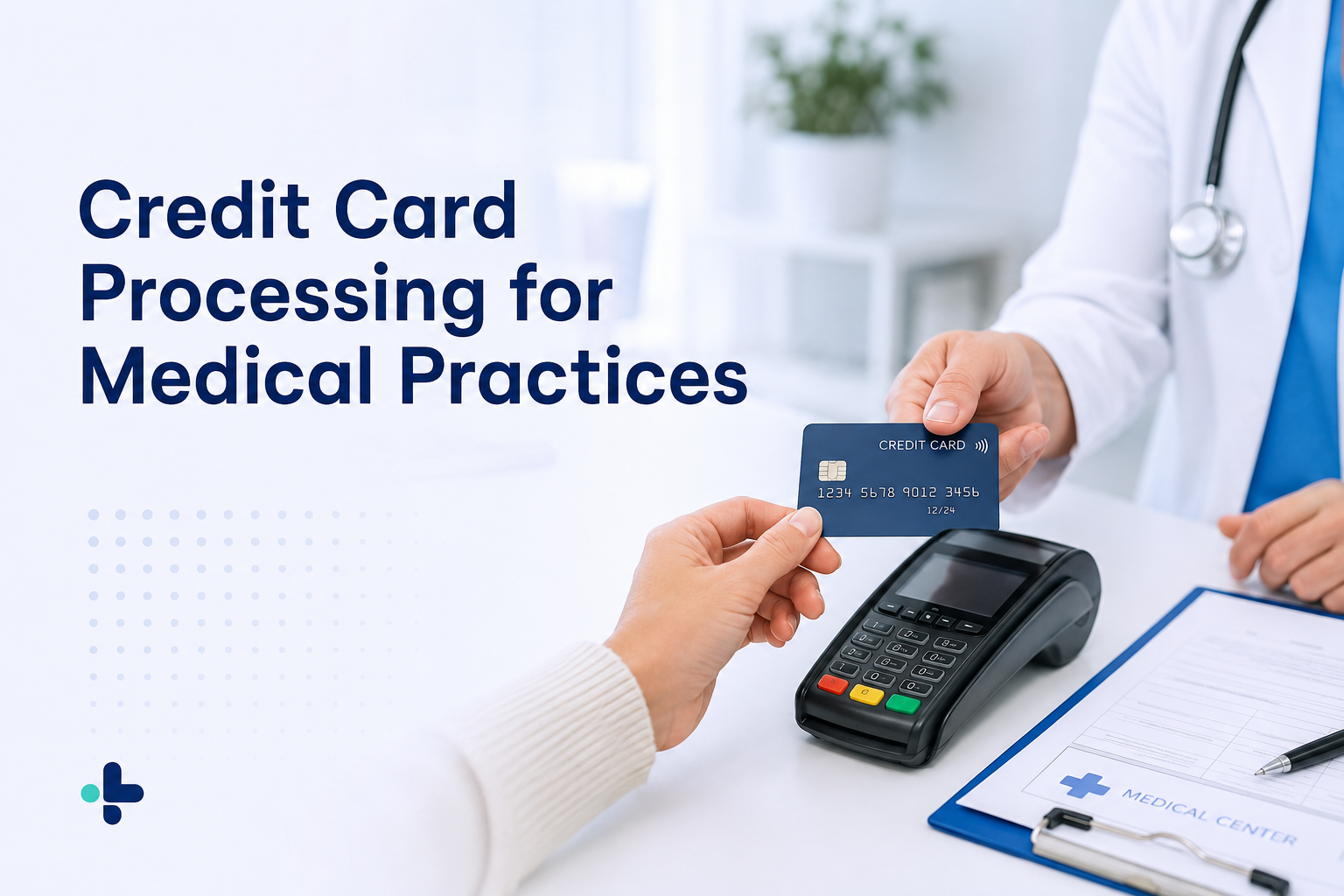
Credit Card Processing for Medical Offices

An effective payment process plays a vital role in patient satisfaction and operational success within the dynamic healthcare industry. The processing of payments has to be safe, reliable, and secure so that the medical office can handle payments and transactions with security. Medical credit card processing will guarantee that the flow of payments is handled briskly and securely, which is something vital in a field based on trust and confidentiality. This article will take a deep dive into credit card processing for medical offices, explaining its advantages, the process involved, and how to select the right provider for your practice.

Understanding Medical Credit Card Processing

Medical Merchant Card Processing is a specialized service fitted for the needs of a medical office’s provider. It grants the possibility to a medical office to collect payment through a customer’s credit or debit card. Unlike a stand-alone terminal placed in any standard retail location, the Medical Merchant Processing must comply with healthcare regulations, such as HIPAA, to keep patient information private during a transaction.

Medical credit card processing will be one of prompt integration with the practice management software. Such software automatically records all payments to reconcile them with the patient’s records, thereby reducing the administrative burden. Most medical payment processors also offer features such as payment plans and recurring bill capability, which are absolutely critical to supporting most expensive treatment options in any practice. These factors stream into making credit card processing a high-value, specialized part of operations in modern healthcare.

Benefits of Merchant Services to Medical Practices

Merchant services for medical practices have a number of benefits to the smooth operation and financial stability and security of a medical office.

  • Smooth Process: A strong medical credit card processing system will eliminate manual billing and thereby reduce errors. Automated payment processing captures payments in an accurate and fast way, freeing up staff to give due attention to patients.
  • Improved Experience: Today’s patients expect the convenience of multiple payment options, credit card, online, and mobile. Meeting these expectations with flexible payment methods encourages more timely payment, which can actually improve practice cash flow. The practices that are most critical deal with high-value Merchant Services For Dental Practices, for which the capability to deal in large transactions and offer options for payment make quite a difference.
  • High-end Security Features: The security features on these merchant services for medical practices are often high-end, with features like encryption and tokenisation extending their protection over sensitive patient data during transactions. This means assurance of not just compliance but also a trust-building measure with the patients, knowing that their finances and personal information are secured.
  • Advance Practice Management: Integration with a practice management system would cut many more administrative tasks. Payments get automatically logged, thus eliminating any need for manual input and reducing errors. Such a high level of efficiency further helps in streamlining operations that then result in increased overall practice management.

Choosing the Best Medical Credit Card Services Provider

Choosing the right Medical Credit Card Processing provider is one of the most important decisions that your medical practice will need to make, both financially and operationally.

  • Professionals: First, begin with providers specialised in healthcare. They know the special needs of medical practices and have developed specific features like compliance with HIPAA and the capability for recurring payment handling. Seek out those that will easily integrate with your present management software for your practice; this will then coordinate the collection of dues with other functions in the administration and minimise any mistakes, raising overall efficiency.
  • Cost: Compare the cost associated with each merchant. Research the fee structures of each: some merchants have transaction fees, monthly fees, or additional fees above and beyond the cost of processing. It is very important to search out a merchant that can balance the cost with quality of service. Avoid merchants with hidden or backdoor fees or those with complex pricing schemes, as these will rapidly degrade the economic advantage gained in credit card processing.
  • Customer Support: A reliable provider should be offering 24/7 support and ensure that any issues involving payment processing are quickly and effectively resolved. Make sure to find a provider with a strong reputation for customer service since smooth operations will very much depend on it.
  • Reviews and Recommendations: Real-world feedback will give you an idea about the reliability of various providers you could engage with and their performance, thus providing you with some basis for your decision-making. Medical practices will be able to select credit card processing providers that meet specific needs and support their operations goals through careful analysis of these factors.

A proper Medical Credit Card Processing system is required to ensure smooth and secure payment transactions when operating a medical practice. Now, it is just that by selecting the right provider, the healthcare offices get an opportunity to combine their operations and streamline patient satisfaction. At the same time, they work on their financial stability. Whether running a general medical practice or a specialised dental office, investment in services like Medical Merchant Processing is a solid strategy when seeking overall practice efficiency and patient trust. With the right system in place, medical offices can focus on what really matters-providing quality patient care. Contact Blue Yonder for all your credit card processing needs! We are the most trusted credit card providers who promise to streamline your medical office’s payment processes. 

Why Does Credit Card Processing Cost So Much for Dental Practices?

As a dental practice, you might find yourself frequently questioning why credit card processing costs are so high. These fees can significantly impact your bottom line, making it essential to understand the factors driving these costs and how you can potentially reduce them. This blog delves into the reasons behind the high credit card processing costs for dental practices and provides actionable tips for managing these expenses effectively.

Reasons Why Credit Card Processing Fees are High for Dental Practices

Have you ever wondered why credit card processing fees are high for dental practices? Understanding the reasons behind these costs can help dental practices manage their expenses better and explore ways to reduce them.

Complexity of Dental Services

Dental practices offer a variety of services, from routine cleanings to complex surgeries. Each service can involve different billing codes, making the payment process more complex. This complexity requires more sophisticated processing systems, which can drive up costs.

Higher Risk of Chargebacks

Dental services often involve high-ticket transactions. When patients dispute charges, known as chargebacks, it can be costly for dental practices. Processors charge higher fees to cover the risk associated with these disputes, which is more common in industries with larger transaction amounts.

Regulatory Compliance

Dental practices must comply with stringent healthcare regulations, such as the Health Insurance Portability and Accountability Act (HIPAA). Ensuring that payment processing systems are compliant with these regulations requires additional security measures, which add to the cost.

Specialized Equipment and Software

Processing credit card payments in a dental practice often requires specialized equipment and software that integrate with practice management systems. These tools ensure seamless operations but come with higher costs than standard retail payment systems.

Interchange Fees

Interchange fees are set by credit card networks (like Visa and MasterCard) and paid to the card-issuing bank every time a card is used. These fees can vary widely based on the type of card and transaction. Dental practices, with their varied and often high-cost services, may face higher interchange fees.

Merchant Category Codes (MCC)

Merchant Category Codes classify businesses based on the services they provide. Dental practices fall under a specific MCC that may have higher processing fees compared to other industries. These codes influence the rates set by credit card processors.

Strategies to Reduce Credit Card Processing Costs

Despite the inherent challenges and high costs associated with credit card processing for dental practices, there are strategies you can employ to manage and potentially reduce these expenses.

Shop Around for Providers

One of the most effective ways to reduce credit card processing costs is to compare different providers. Not all credit card processors charge the same fees, and some may offer better rates for dental practices. Take the time to shop around and request quotes from multiple providers to find the most competitive rates.

Negotiate Fees

Don’t hesitate to negotiate with your current credit card processor. Many providers are willing to negotiate fees to retain your business. If you’ve been a loyal customer with a solid transaction history, use this as leverage to request lower rates.

Encourage Alternative Payment Methods

Encouraging patients to use alternative payment methods, such as debit cards or Automated Clearing House (ACH) transfers, can help reduce processing costs. Debit card transactions typically incur lower fees compared to credit cards, and ACH transfers can be even more cost-effective for large payments.

Review Statements Regularly

Regularly reviewing your credit card processing statements can help identify unnecessary fees or errors. Ensure you understand all the charges on your statement and don’t hesitate to question any fees that seem excessive or unclear. Being vigilant about your statements can help you catch and address issues early.

Leverage Technology

Investing in integrated payment solutions that offer lower rates and better efficiency can also help reduce costs. Modern payment processing systems designed specifically for healthcare providers can streamline operations and reduce the complexity of managing payments, leading to lower fees.

Educate Your Staff

Ensuring that your staff is well-trained in processing payments and handling patient billing can also help reduce costs. Mistakes in billing and payment processing can lead to increased fees and chargebacks. By educating your staff on best practices, you can minimize errors and disputes, ultimately lowering your costs.

Conclusion

Credit card processing costs can be a significant expense for dental practices due to the complexity of services, higher risk of chargebacks, regulatory compliance requirements, specialized equipment and software, and interchange fees. However, by understanding these factors and implementing strategies to manage them, dental practices can take proactive steps to reduce their credit card processing costs.

From shopping around for better rates to encouraging alternative payment methods and leveraging technology, there are several ways to keep these expenses in check. By being informed and proactive, dental practices can ensure they are managing their credit card processing costs effectively, ultimately improving their bottom line.

Why Dentist Merchant Services Matter To Dental Practices

Operating a dental practice involves much more than providing excellent dental care. Efficient payment processing is crucial for smooth operations and patient satisfaction. This is where dentist merchant services come into play. For dental practices, merchant services means being able to accept various forms of payment, such as credit cards, debit cards, and digital wallets. Unlike generic merchant services, those tailored for dental practices address specific needs like recurring billing for ongoing treatments and payment plans.

In this blog, we will explore why specialized dental merchant services are essential for dental practices and how they can benefit your business.

Benefits of Dentist Merchant Services

Dentist merchant services offer a range of benefits tailored specifically for dental practices. These services streamline payment processes, enhance patient satisfaction, and improve overall practice efficiency. Here are some of the benefits of dental merchant services:

Improved Payment Processing

Efficient payment processing means faster transactions, which can significantly reduce wait times for patients. With specialized merchant services, dental practices can offer multiple payment options, making it convenient for patients to pay using their preferred method, be it credit cards, debit cards, or digital wallets. Unlimited credit card processing options are particularly beneficial.

Enhanced Patient Experience

A smooth payment process contributes to a better overall patient experience. When payments are quick and easy, patients are more likely to leave satisfied. Additionally, the ability to set up easy payment plans for costly treatments can make dental care more accessible, leading to increased patient loyalty and retention. This is especially important in dental credit card processing.

Financial Management

Dentist merchant services often come with tools that simplify accounting and bookkeeping. Automated reports and integration with practice management software can help streamline financial management. This leads to better cash flow management, allowing dental practices to maintain financial stability and focus on growth. Specialized dental merchant processing can further enhance these benefits.

Key Features to Look for in Dentist Merchant Services

When choosing merchant services for a dental practice, it’s essential to consider features that will enhance the efficiency, security, and patient experience. Here are a few features to look for:

  • Security and Compliance Security is paramount when handling patient payment information. Ensure that the merchant service provider is PCI compliant and uses data encryption to protect sensitive information.
  • Integration Capabilities Choose a merchant service that integrates seamlessly with your dental practice management software. This ensures that payment processing and patient management systems work together efficiently.
  • Customer Support Reliable customer support is essential. Opt for a provider that offers dedicated support to help troubleshoot any issues that arise, ensuring minimal disruption to your practice.
  • Cost-Effectiveness Transparency in pricing is crucial. Look for a merchant service provider with a clear fee structure and no hidden charges to ensure you get the best value for your money.

How to Choose the Right Merchant Service Provider

Choosing the right merchant service provider is crucial for any business that wants to process payments smoothly and efficiently. The following are the factors to consider when making your decision.

Understand Your Business Needs

Before you start comparing providers, take a close look at your business. Consider the volume of transactions you process, the types of payments you accept (credit cards, debit cards, mobile payments), and whether you need additional features like point-of-sale systems or e-commerce integration.

Compare Fees and Rates

Merchant service providers charge various fees, including transaction fees, monthly fees, and setup fees. Look for transparent pricing and compare the rates of different providers. Be wary of hidden charges that can add up over time.

Check for Contract Terms and Flexibility

Some providers require long-term contracts with early termination fees, while others offer month-to-month agreements. Make sure you understand the terms of the contract and choose a provider that offers the flexibility your business needs.

Evaluate Customer Support

Customer support is essential, especially if you encounter issues with payment processing. Look for a provider that offers 24/7 support and multiple ways to contact them, such as phone, email, and live chat.

Ensure Security and Compliance

Security is critical when handling payment information. Choose a provider that complies with the Payment Card Industry Data Security Standard (PCI DSS) and offers robust security features to protect your customers’ data.

Look for Integration Capabilities

Your merchant service provider should integrate seamlessly with your existing systems, including your website, accounting software, and inventory management. This will help optimize your operations and reduce the risk of errors.

Read Reviews and Get Recommendations

Look for reviews and testimonials from similar businesses. Personal recommendations from trusted business contacts can also be valuable in finding a reliable provider.

Test the User Experience

Before making a final decision, try out the provider’s platform. Check how easy it is to use, how quickly transactions are processed, and whether the reporting features meet your needs.

Conclusion

Efficient payment processing is a cornerstone of any successful dental practice. Dentist merchant services provide the specialized tools and support needed to enhance patient satisfaction, improve financial management, and streamline operations. Consider exploring and choosing the right merchant service provider to take your dental practice to the next level.

Need help finding the perfect merchant service provider for your business? Contact Blue Yonder Corp today for personalized recommendations and expert advice.

3 Ways Credit Card Processing Can Benefit Your Dental Practice

People hold different opinions on most things in life, but one thing that we all can agree on is that convenience is king, and this holds true even in dental care. As dental practices strive to offer the best services, the way payments are processed can greatly  impact patient satisfaction and the overall efficiency of their practice. 

This is where dental merchant processing comes into the picture. It is a modern solution that meets patient expectations while enhancing the financial and operational aspects of a dental clinic. It offers the convenience to your patients to settle their bills effortlessly with just a swipe or a tap, freeing them from the hassle of carrying cash or dealing with checks.

With dental card processing, you can enhance patient loyalty, boost your revenue, and streamline your operations, setting your practice up for long-term success. But how exactly does dental credit card processing achieve this? Let’s explore three key ways it can transform your dental practice.

Enhance Dental Practice with Credit Card Processing

Adding credit card processing to your dental practice can bring many benefits. Here are three key ways it can make a difference:

Improved Patient Experience

In the dental industry, besides quality treatment, patient satisfaction is the most important. Offering credit card processing for dentists can greatly enhance the patient experience by providing convenience and flexibility. When patients have the option to pay with credit cards, it eliminates the need for them to carry cash or write checks, making the payment process swift and effortless. 

The ability to make quick payments can reduce the stress often associated with medical expenses. Patients can focus on their treatment and recovery without worrying about the difficulty of the payment process. This improved experience can lead to higher patient satisfaction, encouraging them to return for future services and recommend your practice to friends and family.

Offering credit card processing shows that your practice is keeping up with the times and what patients want. This forward-thinking approach not only attracts tech-savvy patients but also builds trust and credibility.

Increased Revenue and Cash Flow

Introducing dental payment processing to your practice can really boost your revenue and improve cash flow. One of the biggest perks is getting paid right away for your services. With credit card processing, you don’t have to wait for checks to clear or worry about late payments. This steady cash flow makes it easier to manage your practice’s finances and invest in new equipment or services.

Plus, when patients can pay with a credit card, they might be more willing to go for higher-end treatments. Knowing they can spread out payments or use their credit limits makes it easier for them to choose more expensive procedures. This flexibility can lead to higher revenue as more patients take advantage of the easy payment options you offer.

Efficient Operation Process

Using unlimited card processing in your dental practice can make everything run more smoothly. Automated transactions mean your staff spends less time on billing and chasing payments. This frees them up to focus on patient care and other important tasks.

Modern credit card processing systems offer great security features, protecting your practice from fraud and keeping you in line with industry standards. This extra security not only keeps your finances safe but also helps your patients feel confident that their payment information is secure.

Besides that, using unlimited card processing can simplify your financial records, making bookkeeping and accounting much easier. With accurate and automatic transaction records, you can reduce errors and get a clear picture of your practice’s financial health. This clarity helps you make informed business decisions and plan for future growth, ultimately contributing to the success of your dental practice.

Swipe Right for a Better Dental Practice

Adding credit card processing to your dental practice has a lot of benefits. It makes payments easy and convenient for your patients, helps increase your revenue, and streamlines your operations. Improve patient satisfaction, boost your revenue, and make your operations smoother with Unlimited Card Processing.

Blue Yonder Corp offers top-notch credit card processing solutions designed just for dental practices. With their advanced technology and great support, you can meet and exceed your patients’ expectations. Partnering with Blue Yonder Corp means choosing a secure and reliable solution that helps your practice grow. Take the next step to add convenience to your dental practice today.

3 Tips for Dental Practices to Get Lower Credit Card Processing Fees

Running a successful dental practice requires a keen eye for detail, not just in patient care but also in managing overhead costs. Among the many expenses that can eat into your budget pretty quickly, credit card processing fees often fly under the radar. Yet they can greatly impact your practice’s profitability. If you’re not careful, these fees can add up quickly, leaving you with less money to invest in new equipment, staff, or other key areas of your practice.

That’s why understanding and optimizing your dental card processing fees is so important. By making a few strategic adjustments, you can keep more of your hard-earned money where it belongs—supporting your practice and enhancing patient care.

To help you understand this better, we’ll explore three actionable strategies for dental payment processing that have proven effective for dental practices. Whether you’re just starting or looking to refine your existing systems, these tips will provide a clear path to reducing such credit fees. Let’s get started!

Strategies to Reduce Credit Card Processing Fees

We’ll explore three strategies that can help your dental practice reduce credit card processing fees. By using these tips, you can enhance your financial health and focus more on providing excellent patient care:

Shop Around for the Best Rates

Credit card processing for dentists can be a significant expense, but it doesn’t have to break the bank. Many dental practices stick with the same payment processor for years, assuming that switching is a hassle or that all providers offer similar rates. However, this assumption can be costly. By investing a little time in researching and comparing different providers, you can discover more competitive rates that better suit your practice’s needs.

Start by gathering quotes from multiple credit card processing companies. Ask for a detailed breakdown of all fees, including hidden charges that might not be immediately apparent. Don’t hesitate to negotiate—many providers are open to reducing their rates to win your business. 

Consider joining a dental association that offers member benefits, including lower negotiated rates with certain processors. These associations often have partnerships that provide better deals than you might find on your own.

Switching providers might seem daunting, but the potential savings are well worth the effort. For instance, one dental practice managed to save over $5,000 annually by switching to a processor with lower transaction fees. Regularly reviewing and comparing your options ensures that you’re not overpaying for unlimited credit card processing services.

Implement a  Discount Program

Introducing a cash discount program can be a game-changer for your dental practice. This strategy not only encourages patients to pay with cash but also helps you greatly cut down on credit card processing fees. Here’s how it works: you offer a small discount to patients who choose to pay in cash, effectively passing on the savings from avoiding credit card fees.

For example, offering a 3% discount for cash payments can entice patients while still saving your practice from the higher fees associated with dental merchant processing. Not only does this improve your cash flow, but it also reduces your dependency on credit card processing services.

Optimize Your Payment Processing System

To further reduce your dental credit card processing fees, it’s important to optimize your payment processing system. An efficient system not only streamlines transactions but also minimizes errors that can lead to higher fees. By incorporating advanced payment technologies and training your staff, you can greatly lower your processing costs.

Consider upgrading to EMV chip readers and contactless payment options. These technologies are more secure and often come with lower processing fees compared to traditional magnetic stripe readers. Additionally, they provide a faster and more convenient payment experience for your patients, which can enhance overall satisfaction.

Ensure your staff is well-trained in using the payment processing system. Mistakes such as incorrect transaction entries or failure to batch process payments promptly can lead to higher fees. Regular training sessions and clear procedural guidelines can help your team avoid these costly errors.

Drill Down Your Fees and Manage Savings

Lowering Unlimited Card Processing fees can greatly boost your dental practice’s profitability. By shopping around for the best rates, implementing a cash discount program, and optimizing your payment processing system, you can effectively reduce costs and improve your financial health. Remember, taking proactive steps to manage these fees can lead to substantial savings and allow for better patient care and practice improvements.

For dental practices looking to take control of their credit card processing fees, Blue Yonder Corp offers customized solutions designed specifically for the dental industry. With competitive rates and advanced payment technologies, Blue Yonder Corp can help you streamline your transactions and maximize your savings. Keep more of your hard-earned money within your practice and continue to provide exceptional care for your patients.

Payment Processing for Veterinary Practices

Accepting payments is key for any veterinary practices to stay in business. However, veterinary merchant processing and veterinary credit card processing fees have long been a burden. Traditional options charge exorbitant rates that can cost practices thousands each month. Fortunately, new solutions like Blue Yonder aim to change that by offering more affordable options.

The Problem with High Credit Card Processing Fees

In the past, veterinary practices had little choice but to accept the terms from their credit card processors. They paid high percentages on every credit card transaction and other hidden fees. For a typical practice processing $2,000 or more per month in credit cards, this could amount to over $24,000 in veterinary credit card processing costs in a year.

Over the course of a year, veterinary practices were funneling tens of thousands of dollars directly to their processors. With contracts that made it difficult to change providers, practices felt stuck with no way to lower exorbitant rates. This put undue financial strain on operations and cut into profit margins. Something needed to change to make veterinary merchant processing more reasonable.


Reducing Veterinary Practices merchant processing costs

There are some options clinics can explore to cut down on their monthly credit card fees:

  • Negotiate lower rates – Clinics with higher volumes have more leverage to ask for discounted rates from their processor.
  • Find a specialized vet merchant account – Providers catering specifically to veterinary clinics often offer flat rate plans for less than traditional processors.
  • Switch to debit/ACH processing – While not all clients will choose this option, processing debit transactions has lower fees than credit cards.
  • Use apps for curbside payments – Taking mobile card payments curbside avoids higher “card not present” rates charged on invoices. 

With the right provider, clinics may be able to save thousands in Veterinary credit card processing costs annually while still accepting all clients’ preferred payment methods. Comparing options is worthwhile.

Payment Processing for Veterinary Practices

Affordable Options from Blue Yonder 

Thankfully, Blue Yonder now offers veterinary practices simpler alternatives. Both provide flat-rate veterinary credit card processing solutions that save thousands compared to traditional variable percentage models.

Blue Yonder charges a flat $65 monthly for unlimited card processing, regardless of processing volume. It can now keep more revenue instead of paying processors exorbitant monthly percentages. The lower rates alleviate a major budget strain for veterinary operations.

Features that Streamline Accepting Payments

In addition to significantly lower rates, Blue Yonder provides features that make accepting payments simple and convenient. It offers an online payment portal accessible from any device, where payments can be made online or via emailed invoices.

On the other hand, Wii-enabled credit card terminals allow practices to conduct card transactions from exam rooms or curbside for lower rates. Text-to-pay and chat-to-pay also let clients easily send payment links to clients.

These payment solutions streamline the process versus traditional terminals and integrate with practice management software. Payments sync automatically without manual data entry, saving time.

Real Savings Calculation

One practice that switched to Blue Yonder from another processor is affordable pricing. Let’s do a calculation. Suppose your business transduction over the year is $10,00,000. Veterinary credit card processing generally requires 2-3% of the amount. Let’s say 2% of the processor charges, which can go to $240000 in its first year. By paying a flat $65 monthly versus 2% of their $10,00,000 in annual card volume, total processing costs dropped from over $20,000 monthly to only $780 per year.

The story shows the real financial benefits veterinary practices experience when they switch to affordable payment solutions like Blue Yonder.

Getting Started is Simple

Signing up with Blue Yonder requires no long contracts, hardware costs, or setup fees. Practices can test out either service immediately with no risk or commitment. Both have simple online sign-up processes to create an account and begin accepting lower-cost payments right away.

Most practices that try the flat-rate veterinary credit card processing models promptly cancel their previous providers once they see the savings difference. Client payments have also become more convenient through online portals and mobile-friendly options.

Cut Costs, Boost Profits with Blue Yonder

If your veterinary practice has been paying exorbitant monthly credit card fees, it’s time to learn about more affordable veterinary merchant processing options. Speaking to a Blue Yonder representative can show how moving to their flat-rate models will save you thousands yearly. You’ll protect more of your practice revenue rather than paying unnecessary percentages to other processors. To get started with improved payment solutions, contact Blue Yonder at 800-270-9285 today.

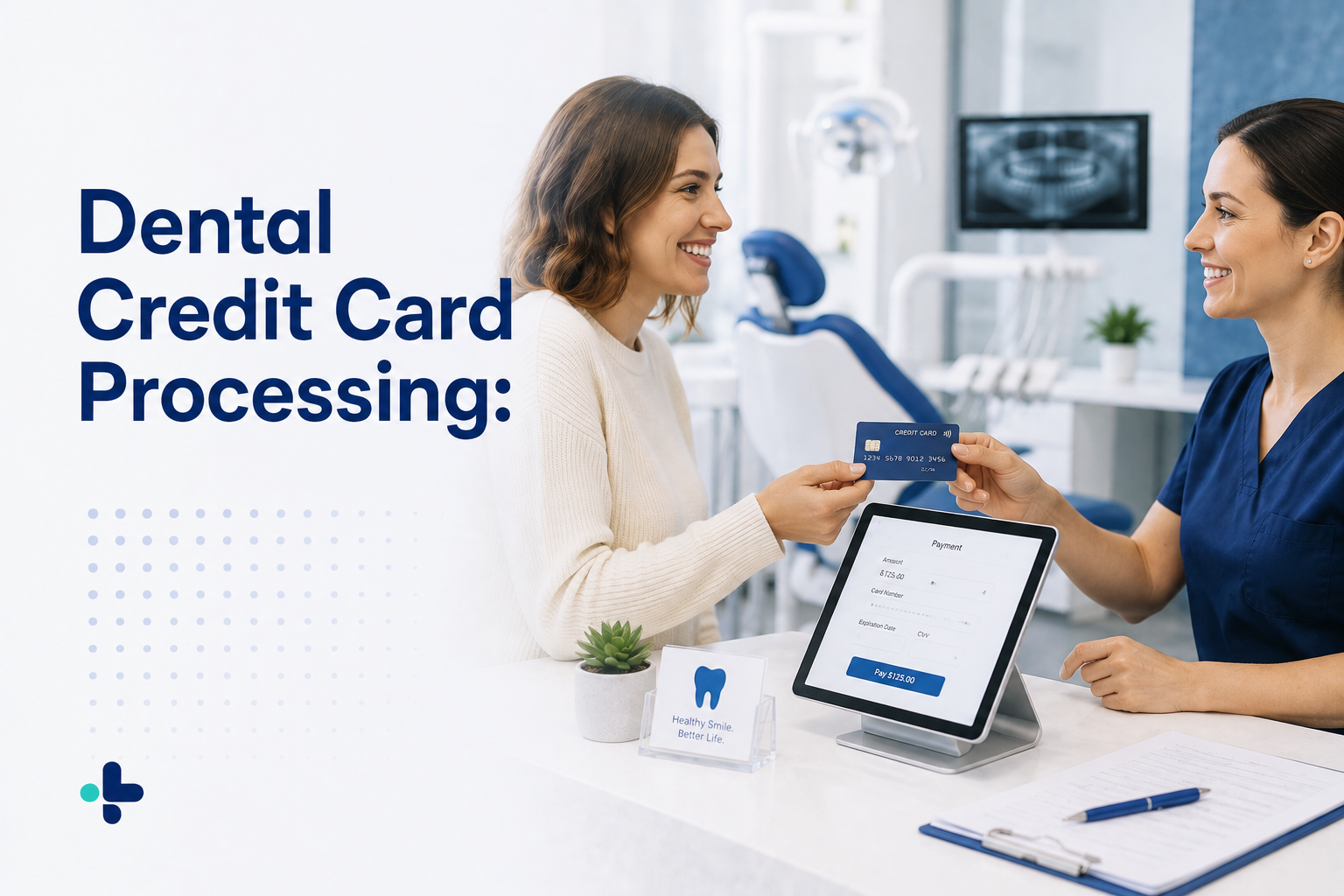
Low Cost Dental Credit Card Processing

Finance management as a component of owning a dental practice could be a daunting issue, especially pertaining to payment processing charges. Dental credit card processing systems can be a viable solution in terms of low prices but high quality when it comes to handling transactions. 

These cost-effective solutions help dental practices improve their payment platforms, making it easier for patients and providing the practice with the necessary cash flow on a regular basis.

Understanding Credit Card Processing Fees

Card transactions also involve several charges that a dental practice can incur as they follow the basic guidelines for dental card processing. These fees include:

  1. Interchange Fees: In credit card processing, interchange fees are normally paid to the card-issuing bank, and they are usually the biggest part of the costs associated with the services. These have a certain distinction depending on the type of card, debit, credit, and reward, and also the type of transaction, either physical or online. 
  2. Assessment Fees: Imposed by the card networks (Visa, MasterCard, and so forth), these are often post-fixed fees per transaction. These fees are typically a percentage of the transaction amount plus a fixed fee and can vary based on the type of card and transaction. 
  3. Additional Fees: Others can be defined as charges such as chargeback fees, batch processing fees, and PCI compliance fees. 
  4. Markup Fees: These refer to the fees charged by the payment processor or merchant service provider. Other expenses may include service charges levied monthly, per-transaction charges, and special rates like charges for entered transactions other than swipe transactions.

Dental Credit Card Processing

Selecting the Right Payment Processor

To minimize dental credit card processing costs, dental practices can adopt the following strategies:

Shop Around for the Best Rates 

While all dental merchant processing is unique, there are more differences in terms of the fees they charge. To get started when choosing a payment processor, evaluate your practice requirements by evaluating transaction volume per month and average transaction value, desired form of payment (credit/debit card, mobile payments, etc.).

Choose the Right Pricing Model

Understanding the different pricing models offered by payment processors can help you choose the most cost-effective option:

  • Interchange-Plus Pricing: This model splits the interchange fee from the processor’s margin, allowing for more visibility into the charges and possible, lower costs. 
  • Flat-Rate Pricing: Similar to the previous model, this model uses a fixed percentage for each concluded transaction, which is easy to calculate, although it might result in higher percentages for large-value operations. 
  • Tiered Pricing: Payments are segmented into three levels (premium, medium-premium, non-premium), each with its respective ratio. This model can be costly and not innovative as compared to the first one, and could lack transparency. 

Leverage Technology:

Implementing better payment methods is a common strategy, with most promoting the use of advanced payment technologies to decrease dental card processing fees. For example, EMV chip card readers will minimize fraud, thus cutting on chargeback costs and possibly resulting in favorable interchange fee tiers.

Ensure PCI Compliance: 

Also, it is necessary to determine whether the payment processor used complies with the Payment Card Industry Data Security Standards (PCI DSS). This compliance is important for safeguarding patient information and preventing liability costs incurred through a data leak.

Considerations in Selecting the Right Payment Processor

When selecting the right dental merchant processing, dental practices should look for the following key features:

  1. Cost Structure: Finally, assess all expenses based on the fees and charges that may be involved in the entire process. Select ‘no surprises’ pricing approaches that give detailed accounts of charges. 
  2. Integration with Practice Management Software: The ideal payment processor should be compatible with your current practice management software. This integration can save time on billing and reconciling the business’s financial transactions. 
  3. Customer Support: Select a processor with a solid customer service team that will promptly address any concerns. Investing in good support is necessary to maintain a constant flow of payments. 
  4. Security Features: Firstly, focus on processors with high-level security measures for patients’ data and lower fraud chances. Search for processors capable of offering end-to-end encryption and tokenization services. 
  5. Contract Terms: Consult the legal language of the contract, payment period, penalties for terminating the contract, and other restrictions that come with the contract. They should also explore ways to avoid long-term contracts or contracts with extremely high penalties for early termination.

Key Takeaways

Low-cost dental credit card processing is essential for the financial health and efficiency of dental practices. By understanding processing fees and implementing strategies to minimize costs, practices can reduce expenses, improve cash flow, and enhance patient satisfaction. Choosing the right payment processor not only streamlines operations but also boosts patient convenience and loyalty. Take action today to explore affordable dental credit card processing options at Blue Yonder Corp and transform your dental practice’s financial future.

The Best Credit Card Processing Service for a Medical Office

Various industries require different tools, features, and services for payment processing. An online eCommerce store might not be the greatest fit for payment processing that functions well in a local retail setting. Likewise with regard to credit card processing for medical purposes. 

Merchant services for dental practices  face particular difficulties in billing, invoicing, and processing payments. If their healthcare payment services fail to appropriately handle these concerns, the practice may encounter serious difficulties, possibly resulting in financial loss and unsatisfied patients.

What Makes the Greatest Credit Card Processing for Healthcare Providers

Your office’s specific requirements must always be considered, whether it be for electronic payments, paper bills, or the inability to accept all credit cards. Consider data and security, ascertain whether your present payment processing system and the new processing system will function together

  1. HIPAA regulations must be followed by software that accesses or stores patient data. All of the payment processors on this list have their own software that simplifies administrative tasks, or they can all be integrated with software tools that meet HIPAA regulations.
  2. To handle transactions on your website, such as online appointment scheduling or patient medication ordering and payment, you will require e-commerce integrations.
  3. Chargebacks and “friendly fraud” can be a major threat to healthcare organizations when insurance companies do not pay as much as the patient expects. Robust merchant accounts designed for the healthcare sector come with integrated safeguards against fraudulent chargebacks and assistance in disputing them in the event that they arise.
  4. You might see patients in your practice who need longer payment terms or who need to spread out the whole amount of their bill. A reliable payment processor should offer a variety of payment options so that your patients can pay for their care in the way that is most convenient for them.  

Dental Credit Card Processing

Top Credit Card Processing Techniques That Comply with HIPAA

Prior to the start of HIPAA-compliant Credit card processing for medical practices, more than just the business associate agreement needs to be signed. Healthcare institutions should consider a number of crucial factors to guarantee that patient health data is kept safe and out of the hands of darknet or cybersecurity hackers. The following are some best practices for implementing HIPAA-compliant credit card processing that any hospital can use:

Selecting the Correct Payment Processor

A reliable Merchant service for medical practices is in compliance with HIPAA.  You must ascertain whether they adhere to the Payment Card Industry Data Security Standards (PCI DSS). Generally speaking, all processors who value their clients and reputation follow those standards. PCI DDS comprises data erasure for authentication, data retention limits, breach response, payment card app security, access control, and encryption. There are numerous security precautions, most of which are also outlined in HIPAA.

Pay with EMV Chip-Supported Terminals

After locating one of these processors, you can proceed to inquire directly with them about whether or not they offer HIPAA-compliant credit card processing services. You have to have total faith that PHI is secure. In the end, if the business associate compromises the data, you will be held accountable. Although it is best to confirm, a processor that complies with HIPAA regulations will never send receipts via unsecure email or text messaging.

EMV chips encrypt information differently every time it is accessed. The chip appears on the front of the card as a bright square. To start a transaction, one must insert their card into the payment terminal. EMV chip-reader-equipped payment terminals are more costly, but the investment is worthwhile. They will assist you in avoiding exorbitant fines for failing to comply with payment card security regulations.

Make Certain to Use vP2PE

 The moment the card is swiped or dipped, it encrypts the data, making it impossible for cybercriminals to duplicate clear data before it reaches the payment gateway. They will only be able to access the indecipherable data. One of the greatest forms of encryption for Medical credit card processing  patient payments is this one, which guarantees security throughout.

Develop Custom HIPAA-Compliant Payment Solution

Although there are many HIPAA-compliant electronic payment systems on the market, you might want to think about creating a custom solution that would fully satisfy your company’s requirements. End-to-end encryption is required to guarantee patient data confidentiality. The second screen faces outward, allowing patients to view their bills and select other payment options such as magstripe cards, NFC contactless, and EMV chips.

Credit Card Services for Healthcare Professionals

Medical credit card processing  payments is not always directly related to HIPAA compliance. But, the processor will be regarded as a business associate and must comply if it offers additional services. 

You should be good as long as your processor complies with HIPAA and the Data Security Standards and your staff members are trained to handle sensitive data. Join Blue Yonder Corp for seamless, HIPAA-compliant payment processing. Enhance your practice’s efficiency today! We also advise investing in EMV chip-reader-equipped payment terminals and continuing to work on encryption.

The Future of Medical Payments: How Merchant Processing is Transforming Healthcare

Healthcare payment systems face tough challenges today, where high costs and slow processes are common. Medical practices seek swift and secure ways to handle transactions. That’s where merchant processing solutions enter. These services offer hope, promising to streamline payments efficiently and easily. With unlimited card processing now within reach, medical credit card processing is not just a trend; it’s a necessity that reshapes how medical practices manage finances. 


The Current State of Medical Payments

While payment is paramount in health care, it frequently becomes a problem. This generates problems that start with traditional methods failing to meet modern needs.

Outdated Practices: Some providers are stuck on paper-based billing, causing unnecessary wastage of resources.

Extended Delays: Practice cash flows are generally disrupted by processing payments taking weeks.

Manual Errors: Hand-processed payments create some errors and make it difficult to tally accounts.

Patient Frustration: Patient displeasure mainly occurs due to slow and unclear reimbursement practices.

Limited Payment Options: Unlimited card processing is important to enhance patient convenience.

Security Risks: This leaves a gap for conventional methods that are not robust enough, posing high risks of breach.

Compliance Issues: Adherence to payment regulation in the bygone era was difficult.


Rise of Merchant Services for Medical Practices

New medical practices are changing the way of Medical merchant processing. They include credit card processing for medical practices, debit cards, internet shopping, and point of sales for transmitting and processing sensitive financial information. They have simplified billing systems with competitive cash flow rates, convenient means of paying, and increased patient satisfaction.

The need for a change in old payment processing to a new model. The new demands are fast and secure digital payment options, which have slowly replaced old and paper-based medical practices, known as medical merchant processing.

On the other hand, due to the limited card processing, healthcare providers have only been able to accept a specific number of payments at specific amounts. These newer merchant services also ensure safety and abide by medico-financial management standards, thus marking new times.


Impact of Medical Merchant Processing

With many benefits, medical merchant processing is transforming healthcare payments. Here’s how:

Efficiency: Facilitates billing and collection, streamlining the administrative load.

Security: Provides strong security measures that protect patients’ financial information.

Speed: Fastens up the transaction, leading to quick money transfers.

Patient Experience: It simplifies the payment process, thereby increasing their satisfactory experience with patient care.

Revenue Cycle: Makes payment faster and shortens the billing cycle, improving the practice’s cash flow.

Accessibility: Provides limitless card handling and increases options for payments.

Compliance: Guarantees that all transactions conform to industry standards, rules, and regulations.


Technological Advancements in Payment Processing in Healthcare

It is imperative to stress that technology has brought changes regarding the processing of payments within the healthcare sector. These are contactless payments, and patients can swipe their payment cards, thus promoting ease and safety. Developments in mobile payment technology now allow customers to do banking via their smartphones or tablets.

Another major achievement in the healthcare sector was integrating the billing system. They support combined billing operations that make mistakes less likely and simplify other administrative operations. Some benefits include fast patient billing, greater accuracy, and improved efficiency. 

These technologies are used in medical practices to provide quicker payment solutions. This move provides medical providers with the speed and security they require today, which are key areas of concern for the medical industry through its ongoing digital revolution of medical payments.


Future of Medical Payments

The horizon for medical payments is dynamic and promising, with several trends indicating a transformative future:

Widespread Adoption of Contactless: The future may see hygiene becoming a proxy for speed in the age where contactless ways of doing business may be commonplace.

Mobile Payment Growth: Consumer technology trends increase medical transactions through mobile platforms.

AI and Machine Learning: This will help these technologies prepare in advance for payment issues, fully automate the billing process, and eliminate errors.

Blockchain for Security: Blockchain could make payment processing more secure and transparent.

International Standards: They are important worldwide and enable standardized international payments.

Unified Payment Platforms: There is also likely to be more consolidation of marketplaces that bundle several payment methods.

Personalized Payment Plans: Personalized payment options are based on the patient’s history or willingness to take particular drugs.


Conclusion

Merchant processing is pivotal in healthcare payments by enhancing efficiency, increasing safety, and boosting services. To remain on top, healthcare providers must adopt medical merchants and unlimited card processing. However, this change doesn’t merely represent an overhaul. It signifies future-proofing for patient transactions. These benefits help providers to take the lead in this revolutionary revolution. Discover seamless payment solutions with Blue Yonder Corp, where secure and efficient merchant services meet the needs of modern healthcare. Act now!